
Overview
InnerSource at Sun Life of Canada brings open-source software development into the enterprise, enabling greater collaboration, reuse, and innovation across teams. By promoting transparent repositories, shared ownership, and community-driven contributions, InnerSource helps break down silos and accelerates the delivery of high-quality digital solutions while meeting enterprise governance and security standards.
My Role
I focus on redesigning the repositroy website UI design, front-end development, and usability testing, aligned with the latest Sun Life Brand. Together, I collaborated with our cross-functional team:
- Kristy Richmond (Delivery Manager / Scrum Master)
- John Hatch ( Product Manager)
- Prashka Samra (Sr. Front-end Developer)
- Oriol Jorba (Full Stack Developer)
- Senthil Kumar (Software Engineer)
- Tomas Pasini (Software Engineer)
Tools that I used in design and implemention:
Figma | Prototype & Interaction
Miro | Ideation & Brainstorming
Maze | Testing & Validation
Notion | Documentation
Ionic | Prototype & Interaction
Miro | Ideation & Brainstorming
Maze | Testing & Validation
Notion | Documentation
Design Objectives
Sun Life’s global brand modernization introduced an updated visual system and a digital-first identity. As part of this larger transformation, the AgIS migration ensures that agency tools are aligned with this refreshed brand direction:
Understanding The Problem
AgIS currently operates on a legacy architecture that is increasingly unable to support the operational, technical, and scalability needs of the modern agency. The system is fragmented, difficult to maintain, and costly to operate.
It wasn’t good enough for the system’s boundaries to be less than optimized for Sun Life’s mission of providing a seamless, digital-first experience for advisors and clients. From a UX perspective, several critical pain points emerged during discovery and analysis:
Problem 1.
Technology-driven, not user-first
The migration focused primarily on backend modernization, data integration, and security updates.
- End users were minimally involved in discovery and testing.
- The design process driven by business logic rather than user needs or context.
- As a result, user pain points from the legacy system persisted despite the upgrade.
Impact
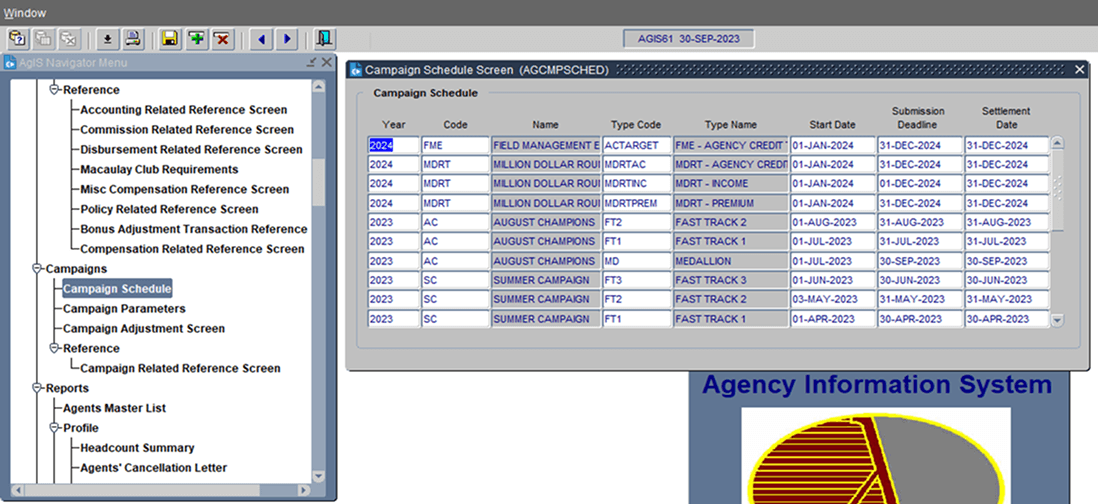
10 Users faced challenges on accomplishing simple tasks effectively, among which they resorted to offline methods to monitor or validate the information.
Problem 2.
Outdated user interface
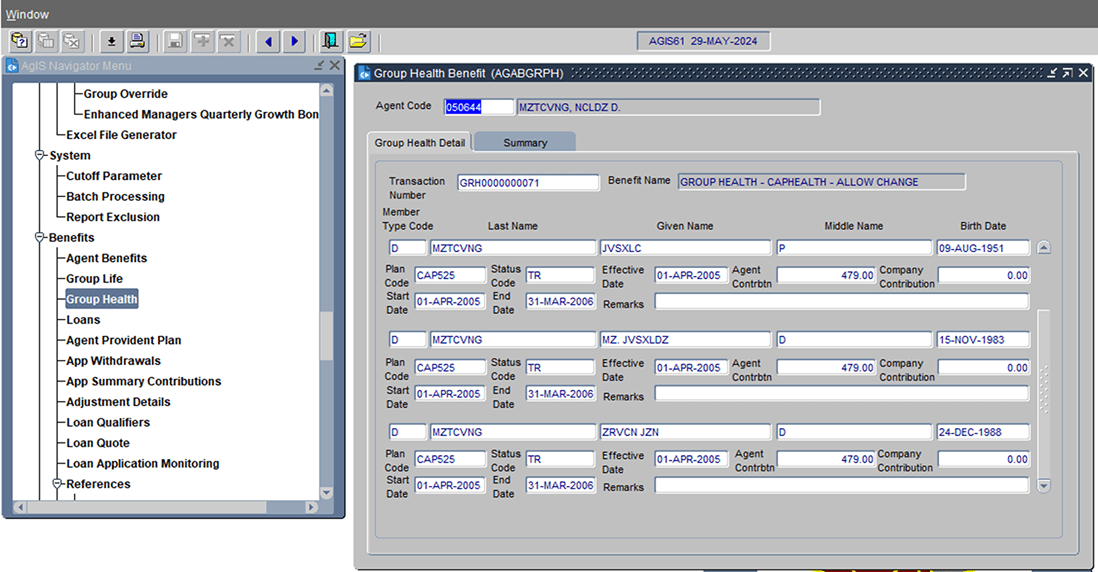
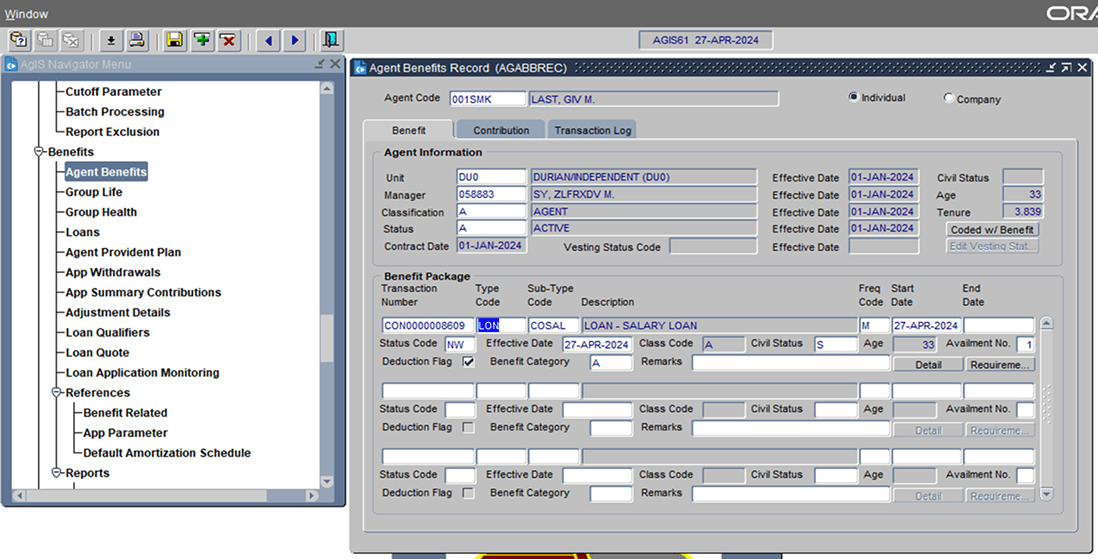
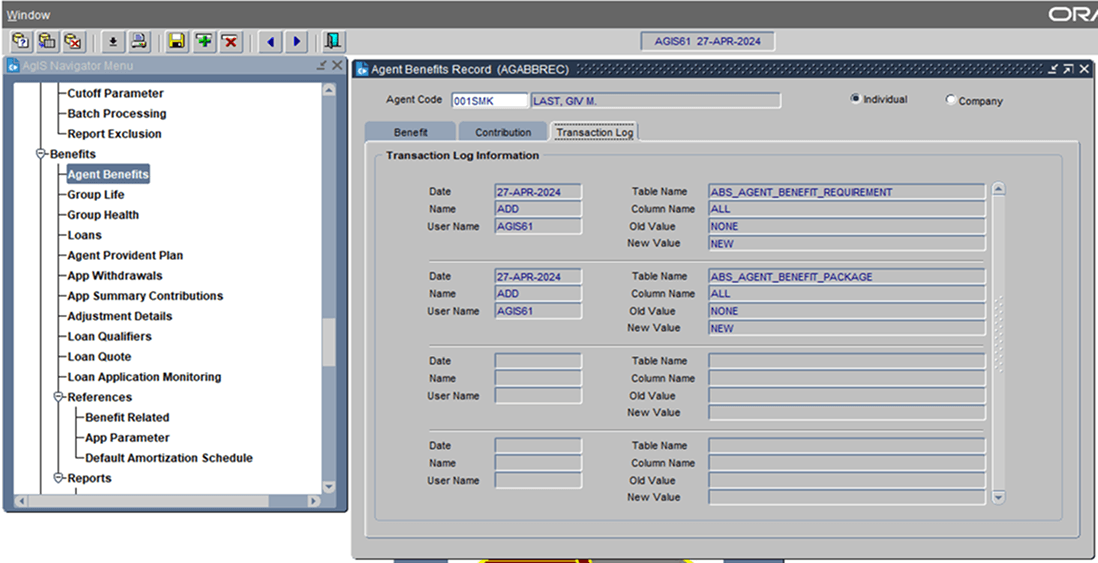
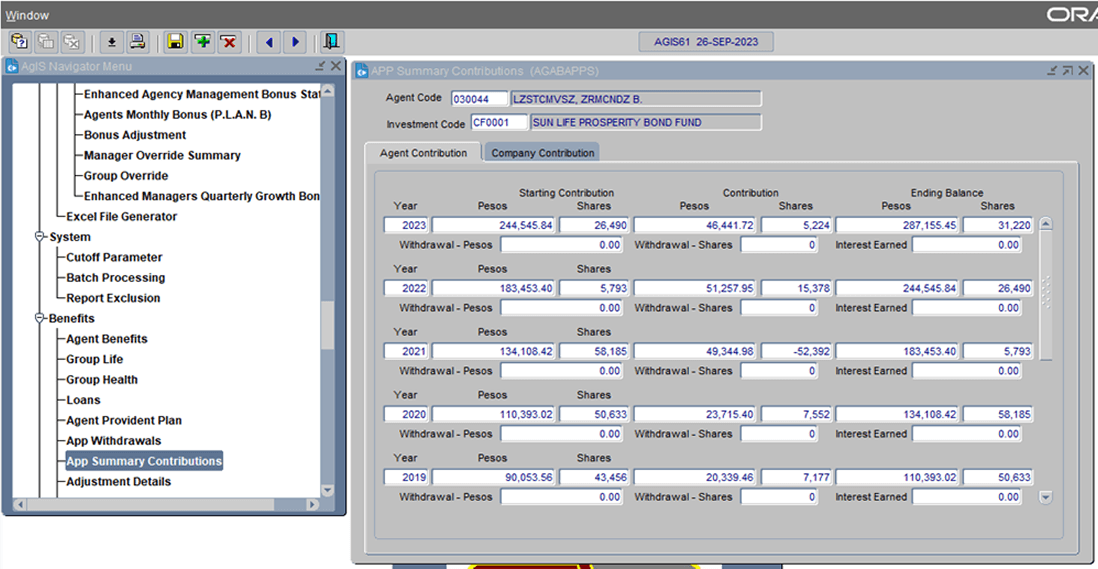
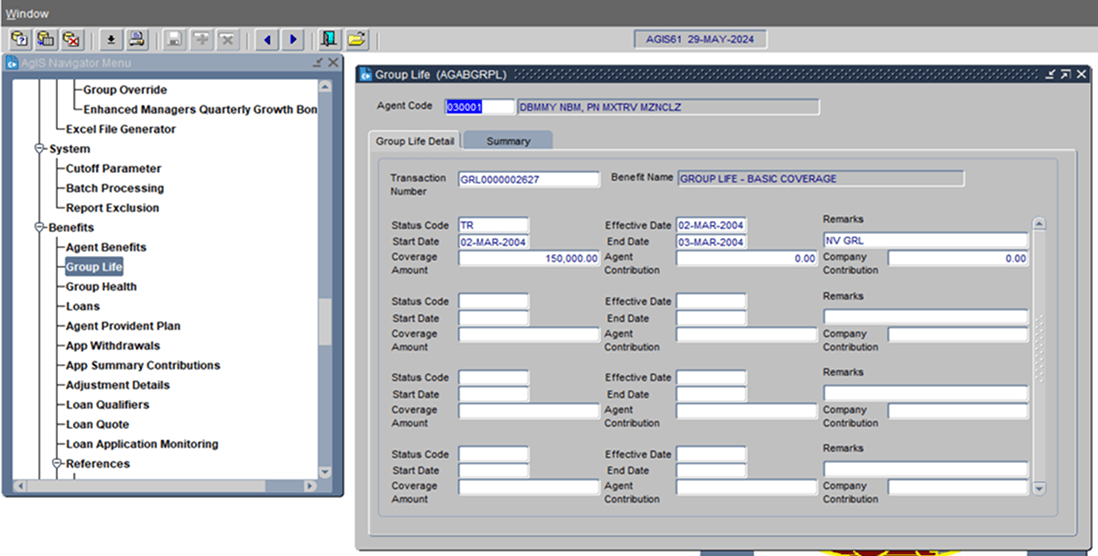
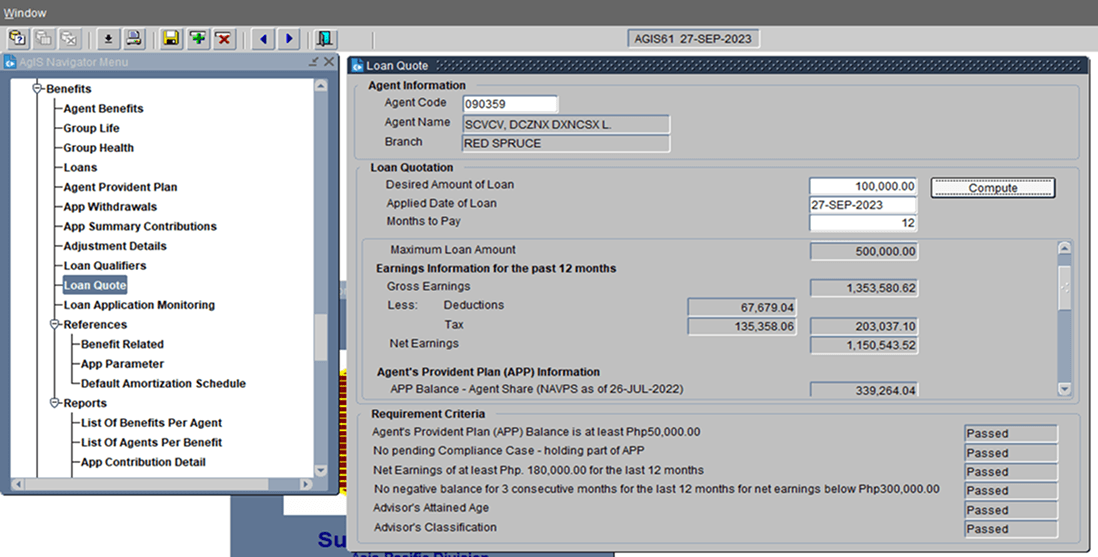
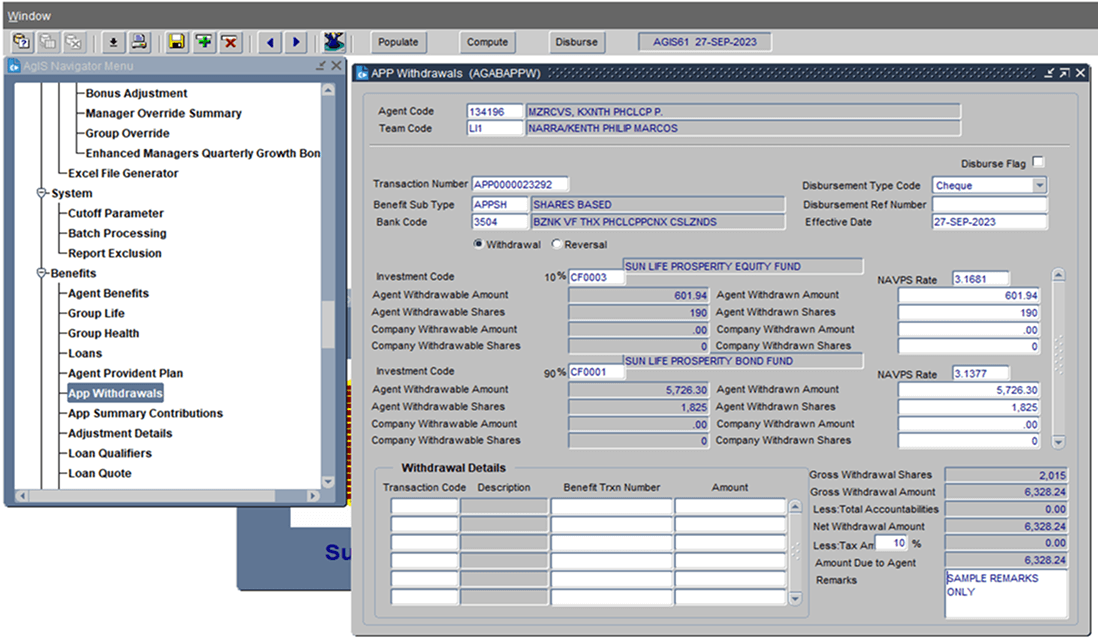
The platform carried over outdated visual patterns, inconsistent layouts, and dense data structures from its legacy version.
- Navigation was complex and unintuitive, with redundant menus and a poorly defined information hierarchy.
- The interface lacked modern design principles such as clarity, accessibility, and responsive behavior.
- Disconnected modules forced users to jump between multiple systems for related tasks.
Impact
Most users struggle to complete tasks efficiently due to confusing interfaces, multiple menus, no hover tips, and unorganized fields.
Problem 3.
Inefficient workflows
Advisors used the platform daily for client updates, performance tracking, and compliance tasks, but the workflows were lengthy and fragmented.
- Key actions required multiple clicks and data lookups across different screens.
- Repetitive manual entries increased human error and frustration.
- The lack of intuitive design slowed down everyday processes.
Impact
Task flows were designed based on internal system logic rather than real advisor behavior or context of use.
Problem 4.
Visual design and brand identity
Across different modules, design patterns were inconsistent and did not align with Sun Life’s modern brand identity.
- Icons, typography, and colors created a disorganized brand perception.
- Lack of standardized components led to visual clutter.
Impact
Inconsistency weakened user confidence and brand coherence, especially when compared to competitors’ digital platforms.
Success Metrics
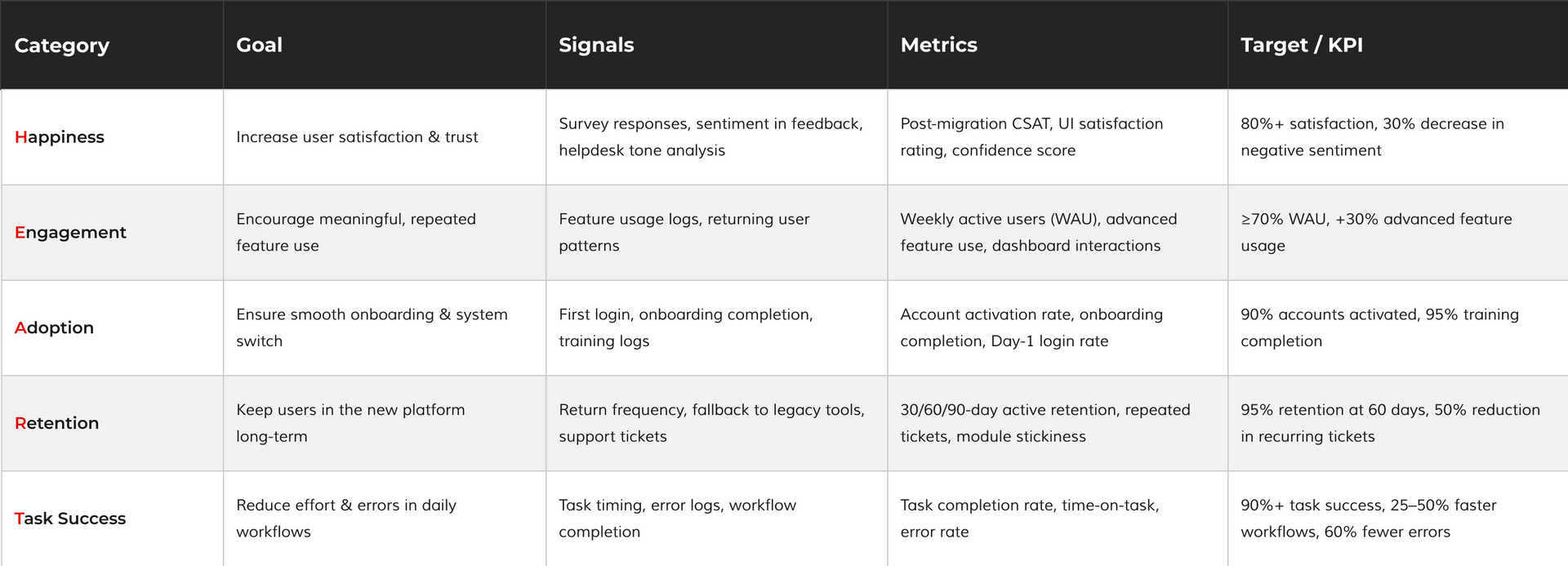
Through the HEART Framework, we measure success across user perception, behavior, adoption, retention, and task outcomes, ensuring the redesign delivers both strategic value and operational excellence.
Research
We conducted user research on the design process to understand user needs and requirements. We also wanted to understand user behavior and motivations to ensure our redesign of the Agency Information System (AgIS) is functional and intuitive.
This research will provide insight into user needs, workflow challenges, and pain points within a system to guide redesigns for a successful migration onto a modern, user-centered platform.
Methods
Qualitative Interview
Usability Testing
User Profiles
Heuristic Evaluation
Goals
- Understand how different users interact with the legacy AgIS system.
- Identify specific pain points and workflow inefficiencies.
- Determine user expectations for system performance and reliability.
- Design a modern system that increases user satisfaction and reduces operational burden.
- Provide design and development with clear insights to inform redesign.
○ Interviews
We interviewed 10 participants, 1-on-1 and virtually, to gain deep insights into how they currently interact with the legacy AgIS system, the challenges they face, and what they need for the modernized platform.
- Background and context
- Please describe your role and your primary responsibilities in the agency.
- How long have you been using the AgIS legacy system?
- Which modules, pages, or tools in AgIS do you use most often?
- What type of tasks depend entirely on AgIS for completion?
- Daily workflow and understanding the process
- Please walk me through your typical workflow using AgIS. What are the main steps?
- Where does your workflow slow down or become difficult?
- Pain points and challenges
- What are the biggest frustrations you experience with the legacy system?
- Which parts of the system feel outdated or inefficient?
- Are there screens or pages that are confusing or difficult to navigate?
- Have you experienced lost data, crashes, freezes, or slow loading times?
- Are there features that frequently break or do not work as intended?
- User experience and interface feedback
- How intuitive or unintuitive do you find the layout and navigation?
- Are there pages that require too many clicks or steps?
- Do you struggle with finding information quickly?
- What screens feel cluttered, outdated, or hard to interpret?
- If you could redesign one screen, which would it be and why?
- Future improvements and expectations
- What features or capabilities would you like the system to have?
- What would make your daily work easier or faster?
- Are there processes you would like to see simplified or redesigned?
- If we rebuilt the system from scratch, what would you prioritize first?
- Which current features should absolutely be kept in the new system?
- Closing and reflection
- Do you have stories or examples that illustrate significant challenges you've faced?
- What is the most crucial thing the migration team needs to understand about your work?
- Is there anything else you want to share that we haven't covered?
○ Key Findings
Legacy system architecture Is outdated and limits scalability
The current platform is built on a monolithic, aging architecture that cannot support modern performance, and security standards.
Users face a high cognitive load due to the fragmented workflow.
Users complete tasks through multi-screen, non-linear workflows that require memorization and manual tracking.
Data entry burden is excessive and
error-prone
High validation error rate, averaging 20–30%. Prolonged and repetitive forms lack intelligent assistance, increasing effort and error rates.
System performance is inconsistent, causing user disruptions
Average page load time exceeds 4 seconds; frequent session timeouts and long entries greatly encumber daily operations.
Search and data retrieval are unreliable
Records can't be reliably found by users, leading to disrupted workflows and mistrust in the system.
Training and onboarding challenges that slow down operations
The system requires excessive mentoring and manual training due to the lack of an intuitive UI and in-system support.
○ Insights
- Understand how different users interact with the legacy AgIS system.
- Identify specific pain points and workflow inefficiencies.
- Determine user expectations for system performance and reliability.
- Design a modern system that increases user satisfaction and reduces operational burden.
- Provide design and development teams with clear insights to inform redesign.
User Profile
To ensure the new system meets user needs, it is critical to clearly define the target users who will interact with AgIS daily. These users represent a cross-section of business operations, investment management, finance, and executives, each with distinct needs and challenges.
Note: I use a generated AI as a stock image of the user. Our clients don't want their images used in a presentation, as this violates the company's policy.

Charlene Sabado
Role: Financial Advisor
Organization: Sun Life GREPA Financial
Experience: 5 years as a Finance and Investment Advisor
Tech Proficiency: Moderate
Daily Tools: AgIS, and Spreadsheets
Uses AgIS daily to evaluate portfolio performance, analyze investments, and generate insights for strategic planning.
- Serve clients without system delays
- Access real-time client, policy, and commission data
- Complete sales and servicing tasks efficiently
Frustrations:
- Data inconsistencies between AgIS and Finance systems require manual verification
- Lack of visualization, no graphs or dashboards to show visual performance
- Real-time, accurate, and integrated data across systems
- Learning new workflows without clear guidance
Expectations:
- Dynamic dashboards with visualization and filtering
- Serve clients efficiently without technical interruptions
- Search and filter features for faster insights
- Real-time, accurate, and integrated data across systems
- Quick data queries and drill-down capability
- Consistent and reliable performance
Scenario
Charlene relies on AgIS daily for:
- Client profiling
- Proposal generation
- Policy servicing and tracking
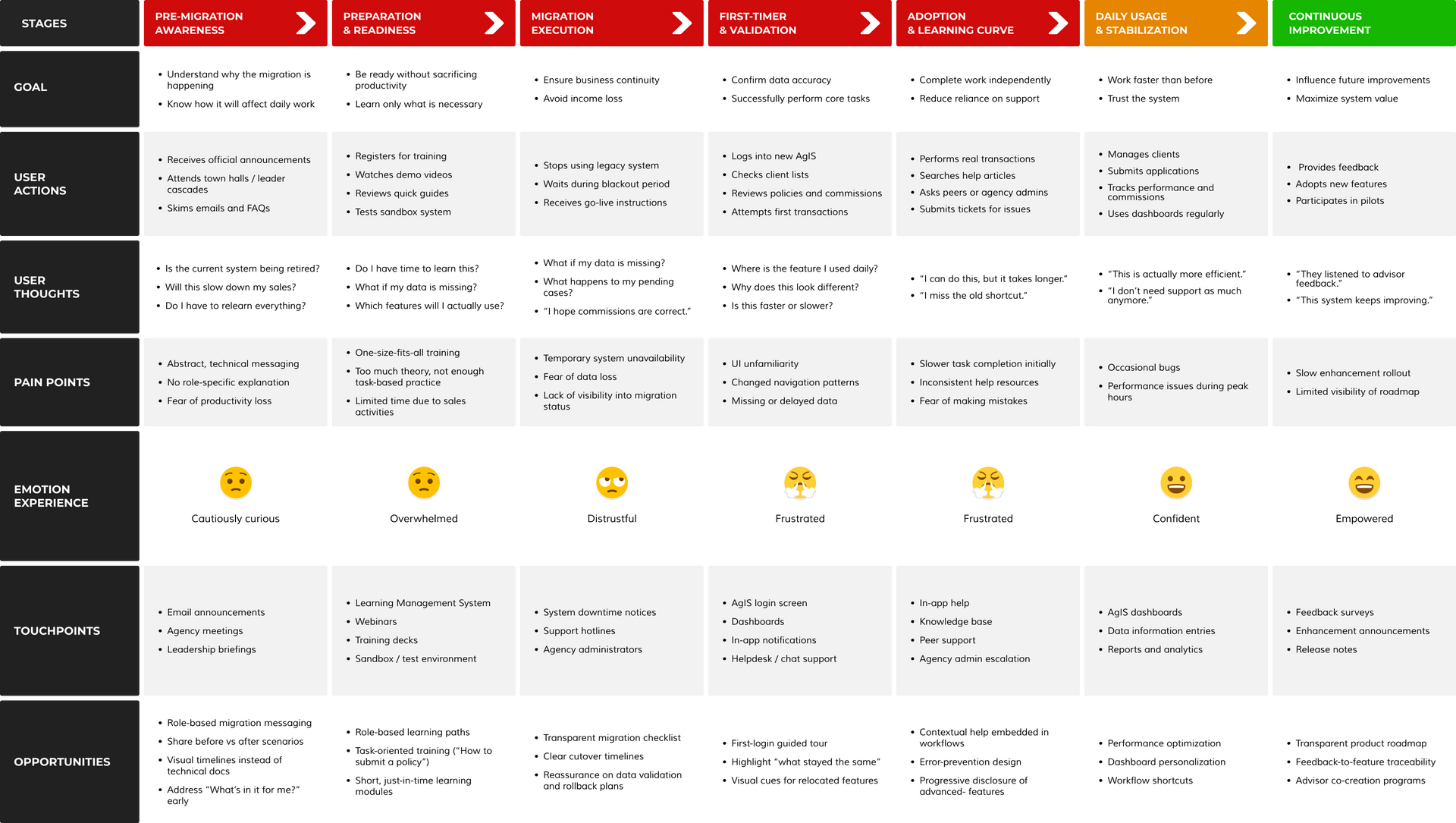
During the AgIS tech migration, she must continue meeting sales targets while adjusting to:
- A new UI dashboard and experience
- Updated security and login processes
- Improved backend performance
Danillo Montemayor
Role: Portfolio Manager
Organization: Sun Life Assets And Management Corp Inc. (SLAMCI)
Experience: 12 years as a Finance and Portfolio Manager
Tech Proficiency: High
Daily Tools: Risk Management System, AgIS, and Spreadsheets
Uses AgIS daily to evaluate portfolio performance, analyze investments, and generate insights for strategic planning.
- Serve clients without system delays
- Access real-time client, policy, and commission data
- Complete sales and servicing tasks efficiently
Frustrations:
- Data inconsistencies between AgIS and Finance systems require manual verification
- Lack of visualization, no graphs or dashboards to show visual performance
- Real-time, accurate, and integrated data across systems
- Learning new workflows without clear guidance
Expectations:
- Dynamic dashboards with visualization and filtering
- Serve clients efficiently without technical interruptions
- Search and filter features for faster insights
- Real-time, accurate, and integrated data across systems
- Quick data queries and drill-down capability
- Consistent and reliable performance
Scenario
Danillo uses AgIS to:
- Review agent portfolios
- Analyze policy performance
- Track compliance and persistency
During migration, he must ensure:
- Data integrity
- Continuity of reports and dashboards
- Accuracy of analytics
Andrea Tanfelix
Role: Executive Manager
Organization: Sun Life Of Canada, Philippines Inc. (SLOCPI)
Experience: 14 years as a Finance and Portfolio Manager
Tech Proficiency: High
Daily Tools: AgIS, and Spreadsheets
Review investment performance and portfolio summaries to make strategic business decisions.
- Monitor overall portfolio performance
- Approve investment strategies and budgets
- Evaluate ROI, risks, and long-term projections
- Communicate insights to executives and investors
Frustrations:
- No visual dashboards to simplify complex performance data.
- Lack of visual information presented in raw data form
- Requires manual consolidation from multiple reports
- No alerts or notifications for critical changes.
Expectations:
- A dashboard visualizing data and KPI's
- Interactive dashboards with drill-down capabilities
- Automated reporting for management reviews
- Quick, intuitive navigation for high-level insights
Scenario
Andrea depends on AgIS for:
- High-level dashboards
- Sales, growth, and risk indicators
- Executive reporting
During migration, her focus is on:
- Business continuity
- Reputation risk
- Strategic visibility
Our Process
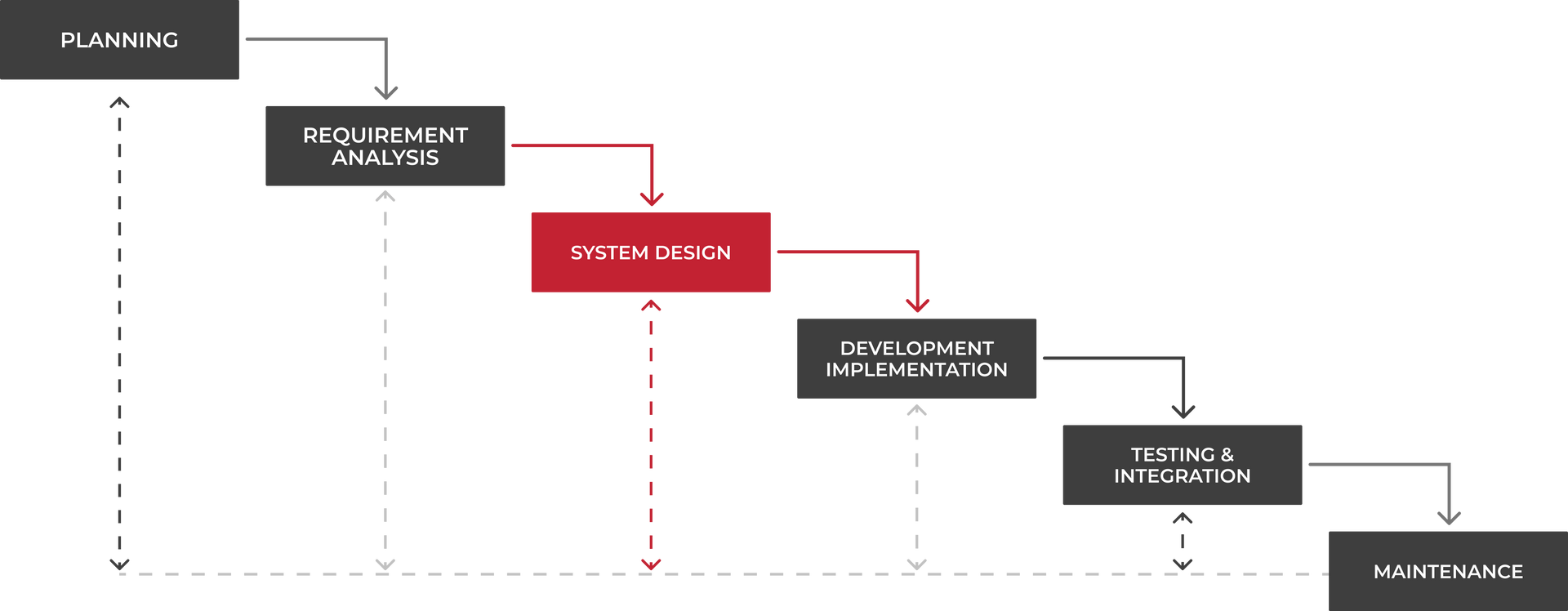
The
AgIS Tech Migration project adopts the
Waterfall Software Development Life Cycle (SDLC). This approach guides the team through clearly defined phases from planning through deployment and maintenance. This method provides
clarity,
precision, and control, which are essential for migrating large-scale legacy systems, complex data, and multiple stakeholders.
User Flow
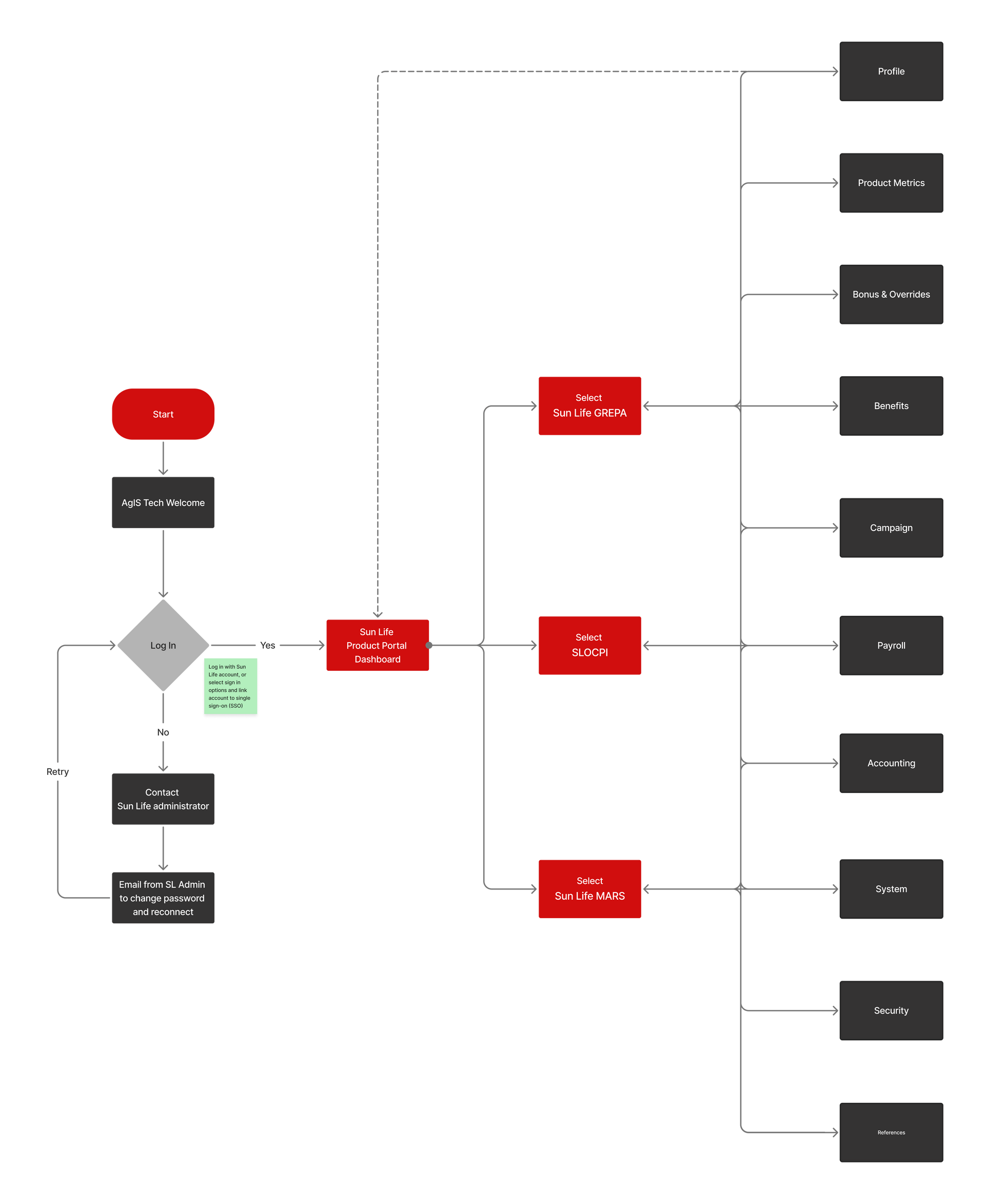
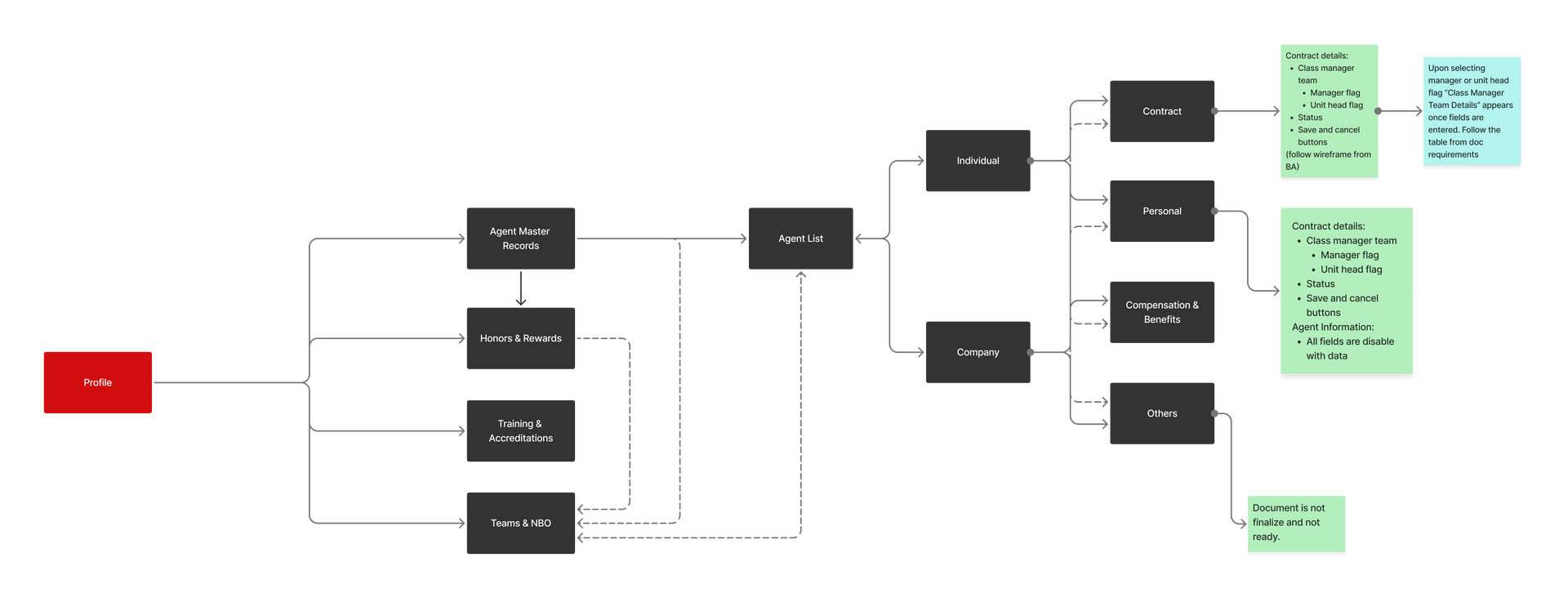
The AgIS outlines the end-to-end process that users follow when accessing and navigating through the platform and its integrated product dashboards: Sun Life Of Canada, Philippines Inc. (SLOCPI), Sun Life Asset Management Company Inc. (SLAMCI), and Sun Life GREPA.
Profile
The Agent Master Records defines how users interact with the system to manage, view, and update agent-related information within the AgIS platform. The user flow for Agent Master Records and Agent List provides:
- A centralized process for accessing and maintaining agent information
- Efficient navigation between summarized agent listings and detailed profiles
- Secure, role-based control to ensure accurate, and real-time data management across the AgIS platform
High-level Design
The AgIS Tech is designed as a centralized, multi-system platform that integrates various organizational and partner modules, including Sun Life of Canada, Philippines Inc. (SLOCPI), Sun Life Asset Management Company Inc. (SLAMCI), and Sun Life GREPA into a unified environment. The redesign focuses on enhancing usability, scalability, and visibility, enabling users to monitor, manage, and validate complex migration processes through an intuitive, data-driven interface.
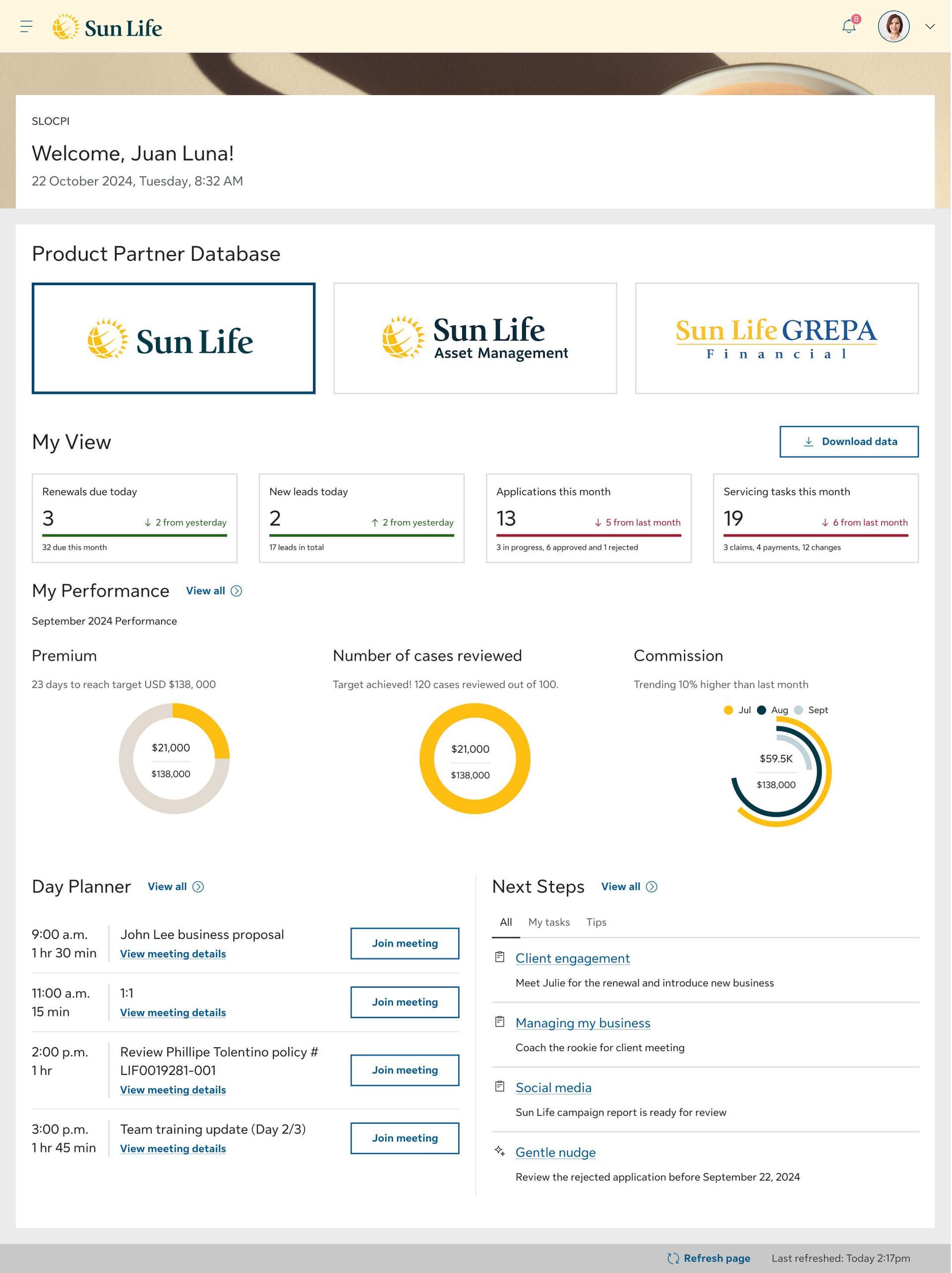
Dashboard
The AgIS Tech Migration Dashboard redesign streamlines the migration process into a data-driven, user-focused operation.
- Consolidated dashboard shows all critical metrics in a single view
- Clean, modern interface aligned with Sun Life’s brand modernization
- Each integrated product showcases as a card view. Once tapped, it will generate the "My View" status and "My Performance" metrics
- Product cards will also serve as data records once selected
Improvement
- One-stop visibility
- Shorter learning curve for new users
- Higher productivity for operations teams
- Audit-ready transparency
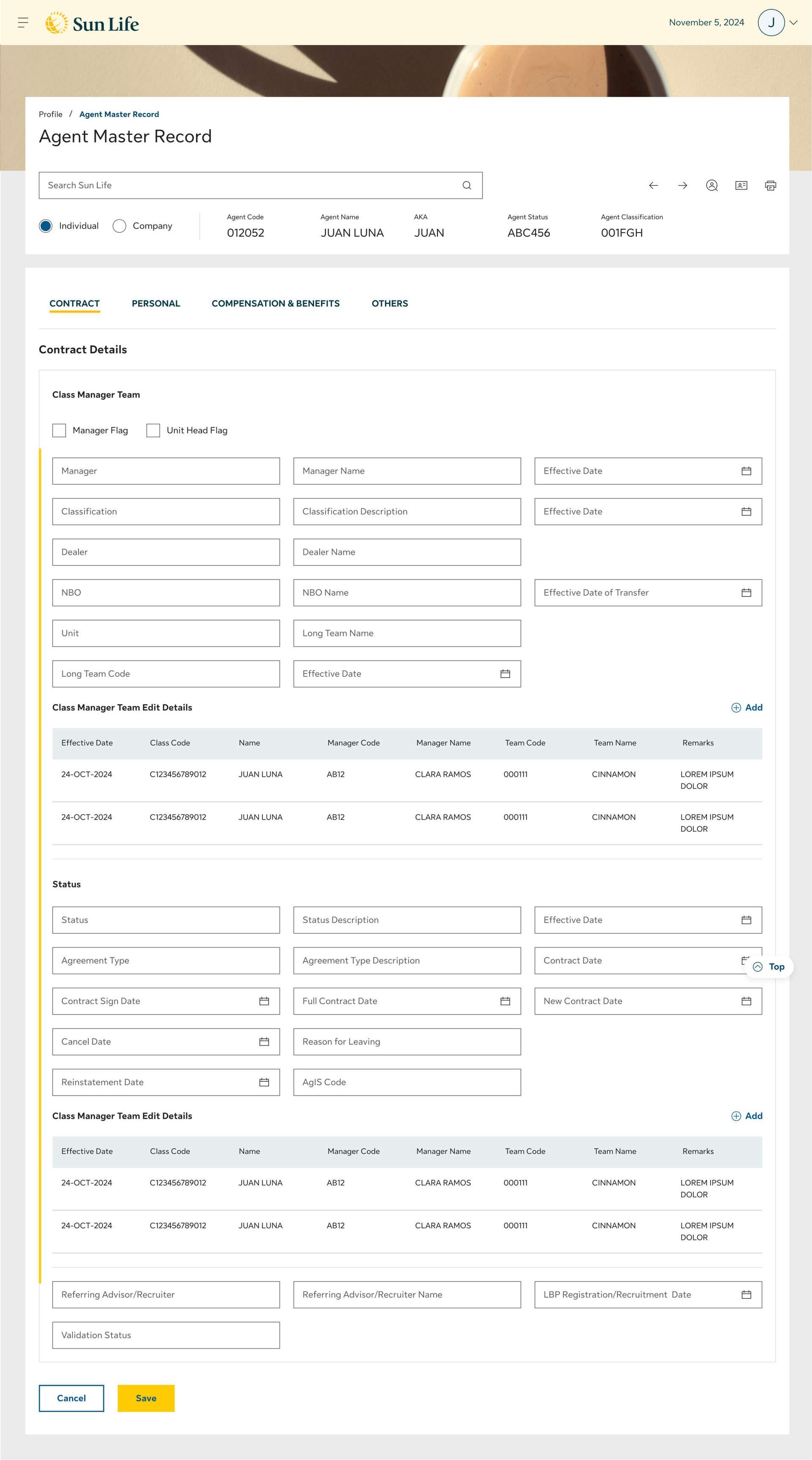
Agent Master Record
This transformation significantly improved data quality, usability, governance, and end-to-end operational efficiency across Sun Life’s distribution management processes.
- A comprehensive view of each agent’s contractual information and team alignment.
- Editable fields accessible by authorized users.
- Automatic validation of dates and product references.
- Audit log of changes, displaying editor name and timestamp.
Improvement
- One-stop visibility
- Shorter learning curve for new users
- Higher productivity for operations teams
- Reduces dependency on manual reports
- Audit-ready transparency
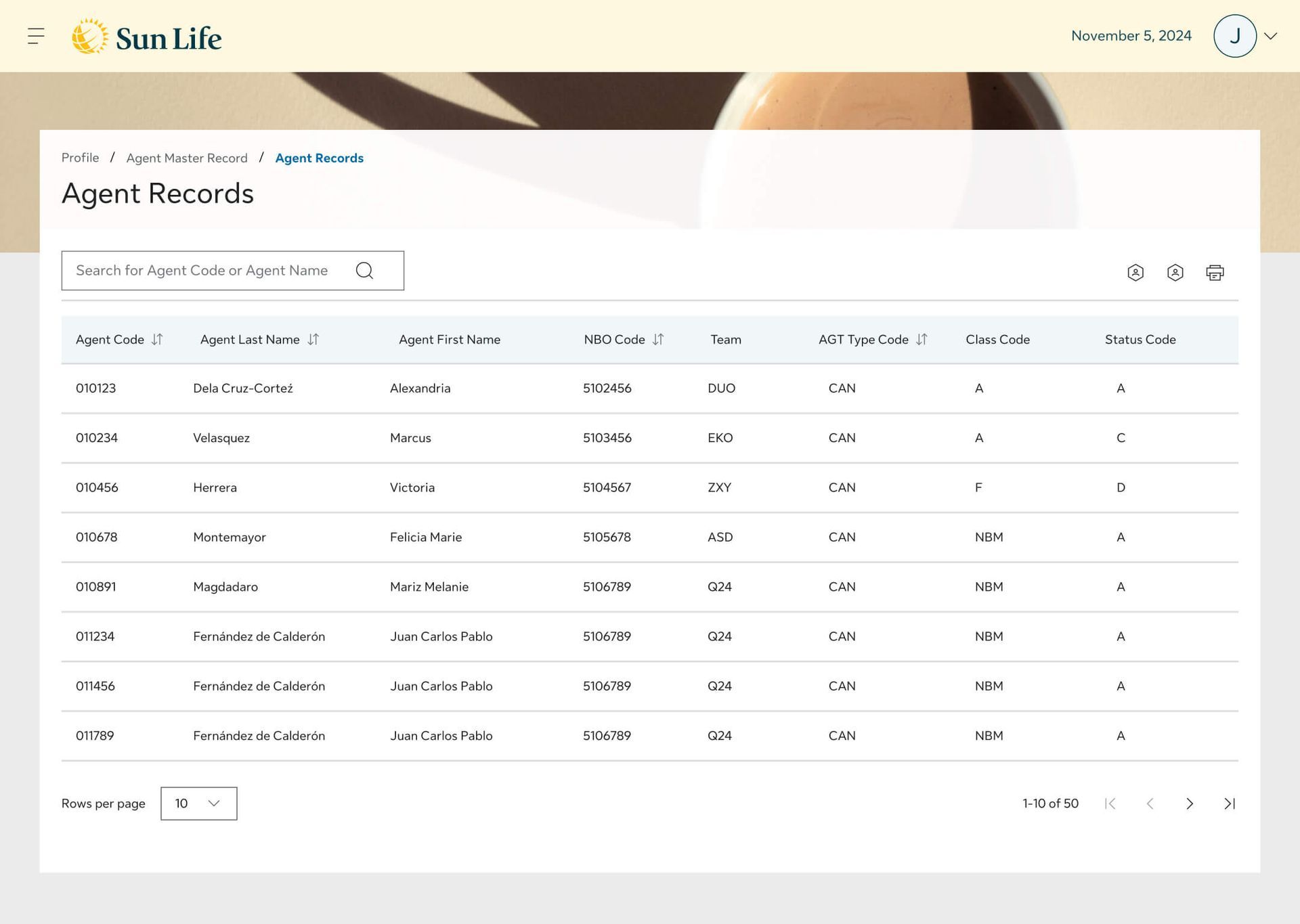
Agent Record Listings
The Agent Listings functionality has been modernized into a web-based, dynamic listing interface that allows users to view, search, filter, and manage agent information efficiently.
- Enable quick access to detailed agent profiles and contract records.
- Improve data accuracy and visibility through centralized management.
- Streamline search, sorting, and filtering operations for large agent populations.
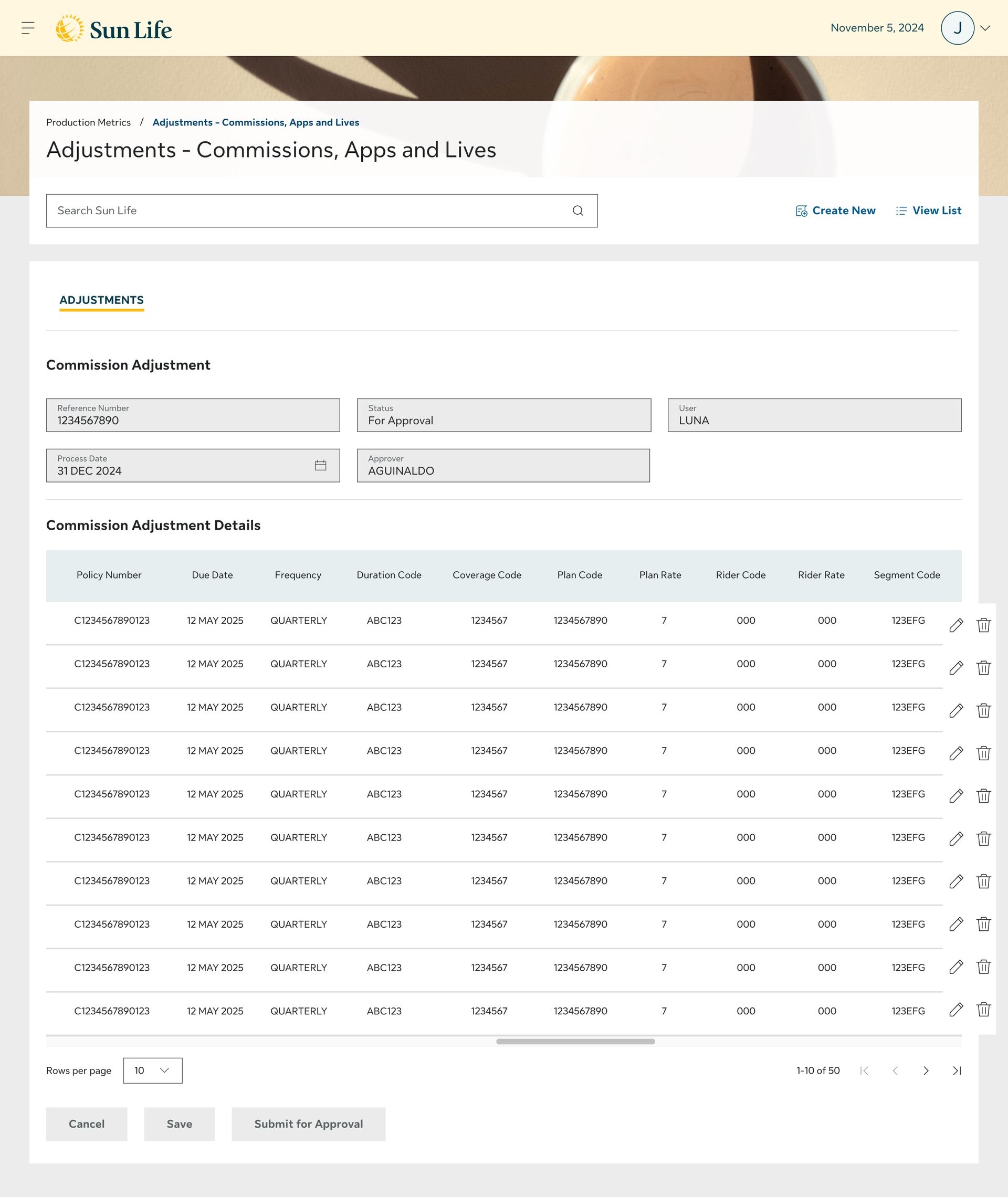
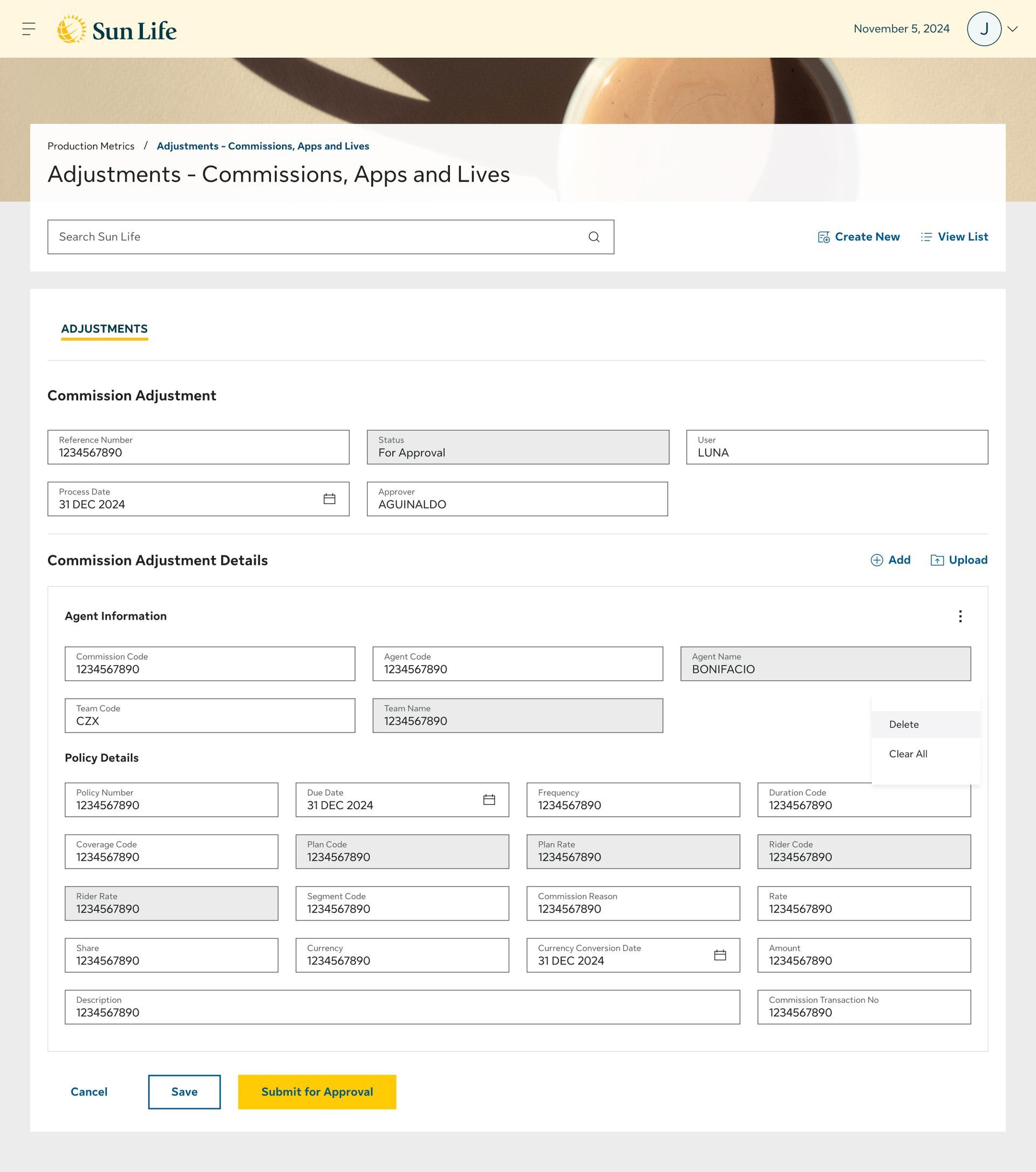
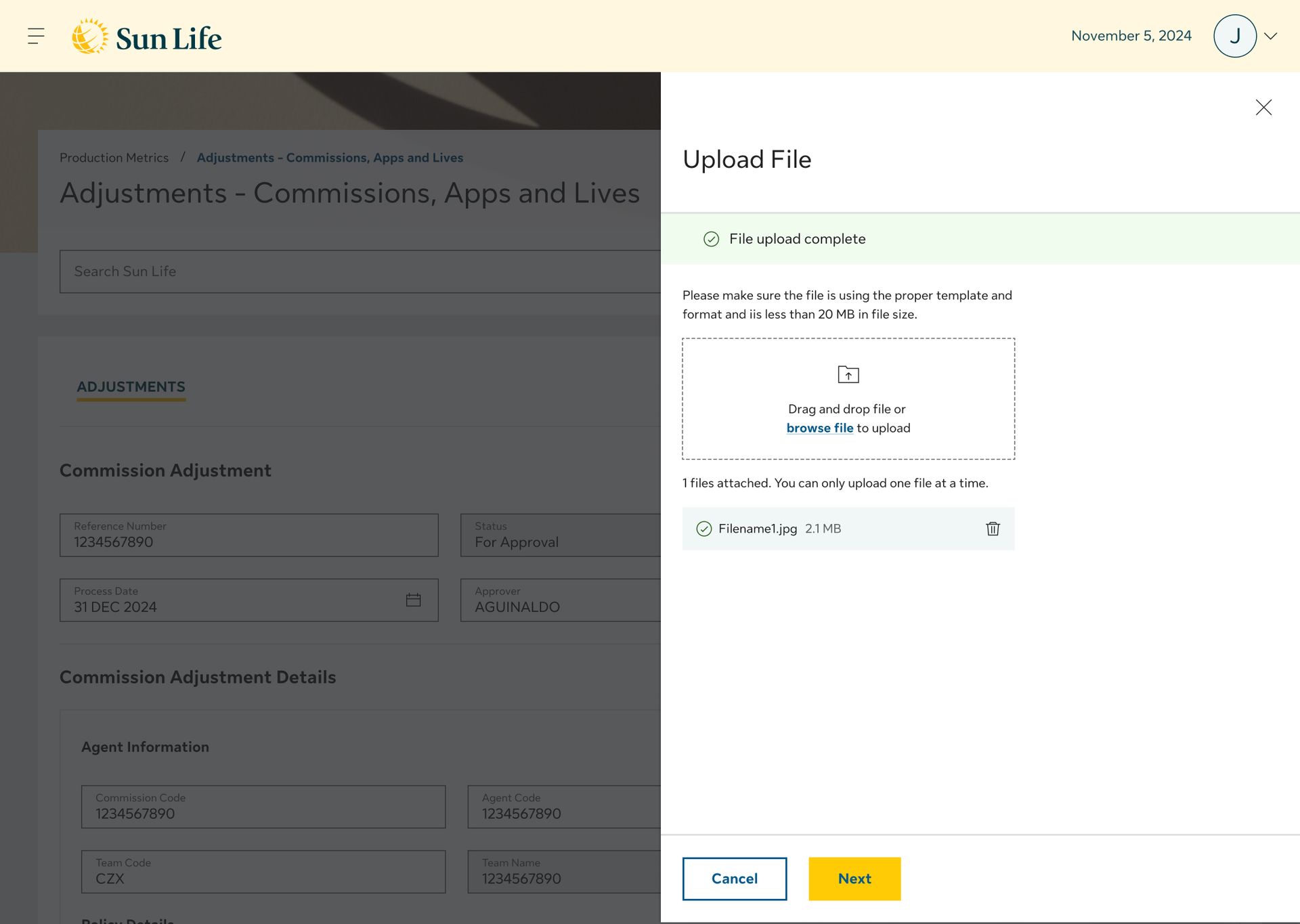
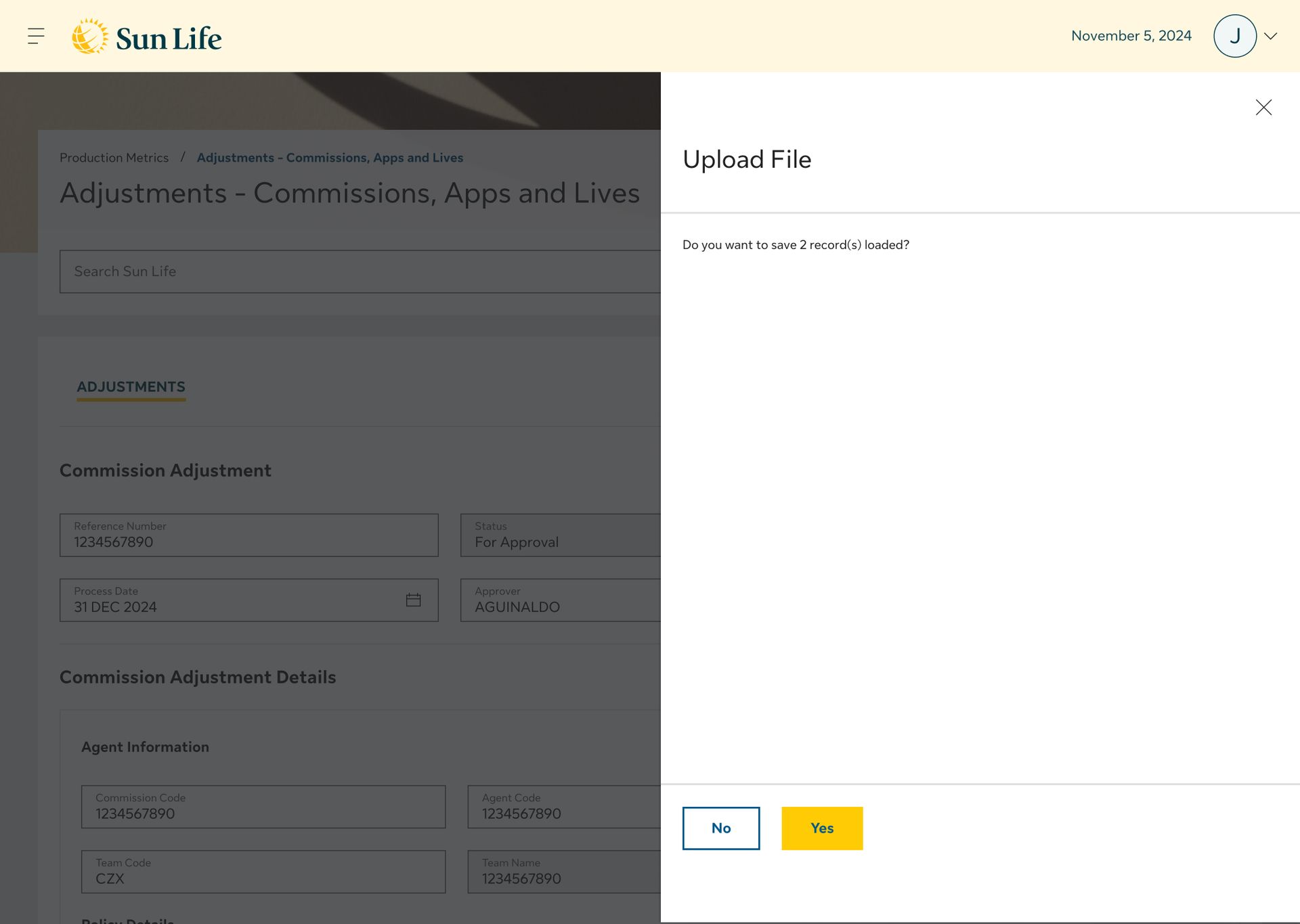
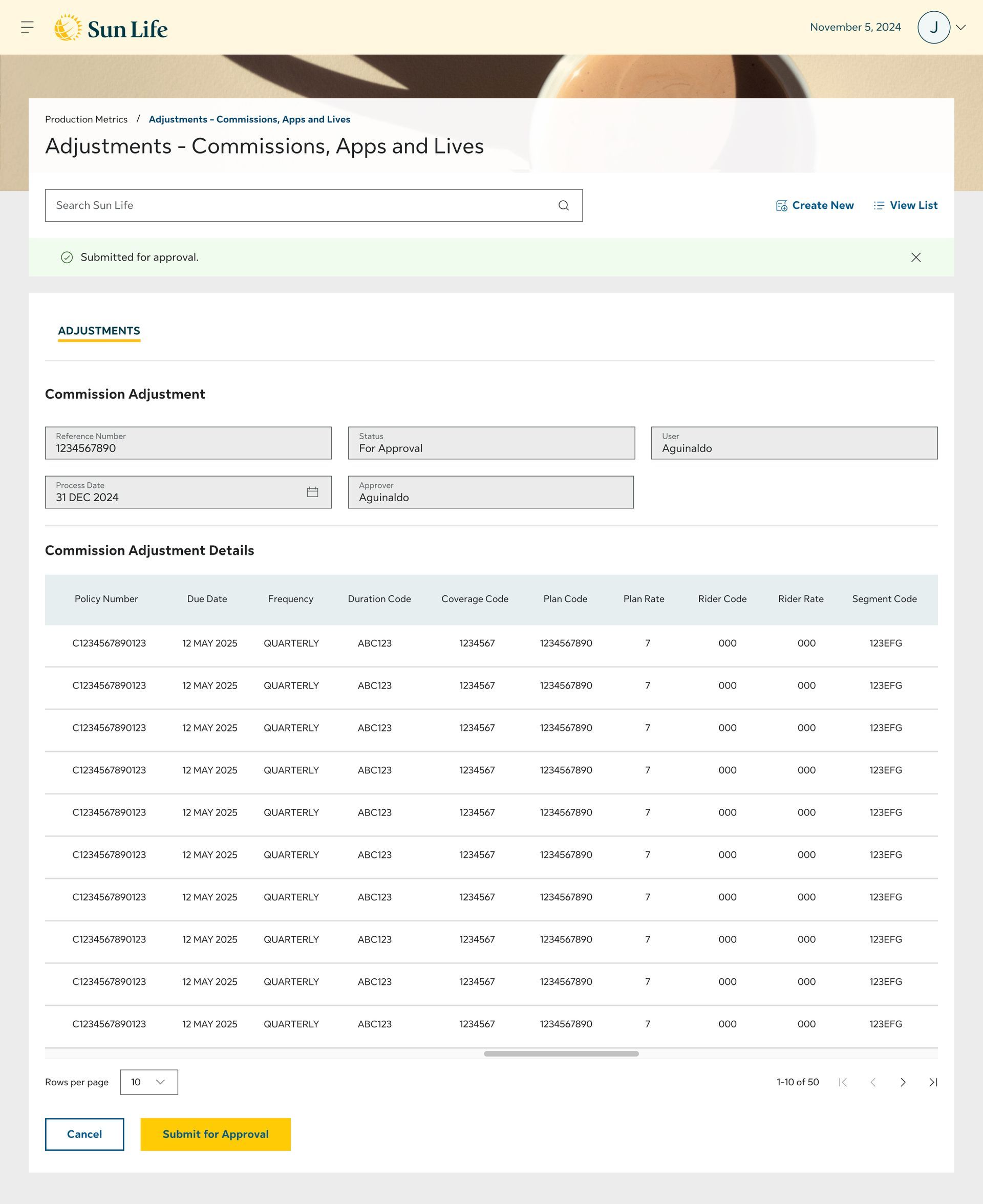
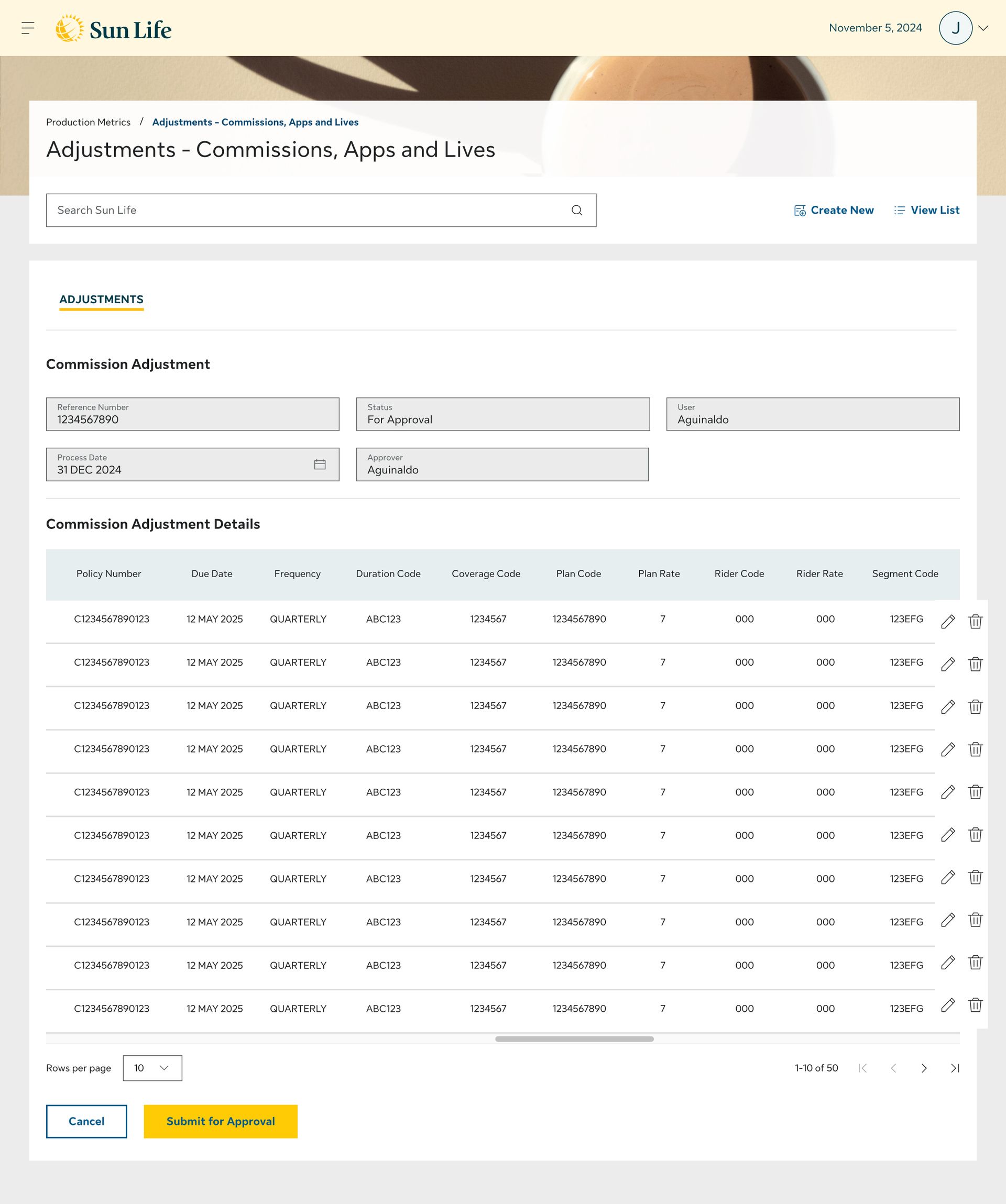
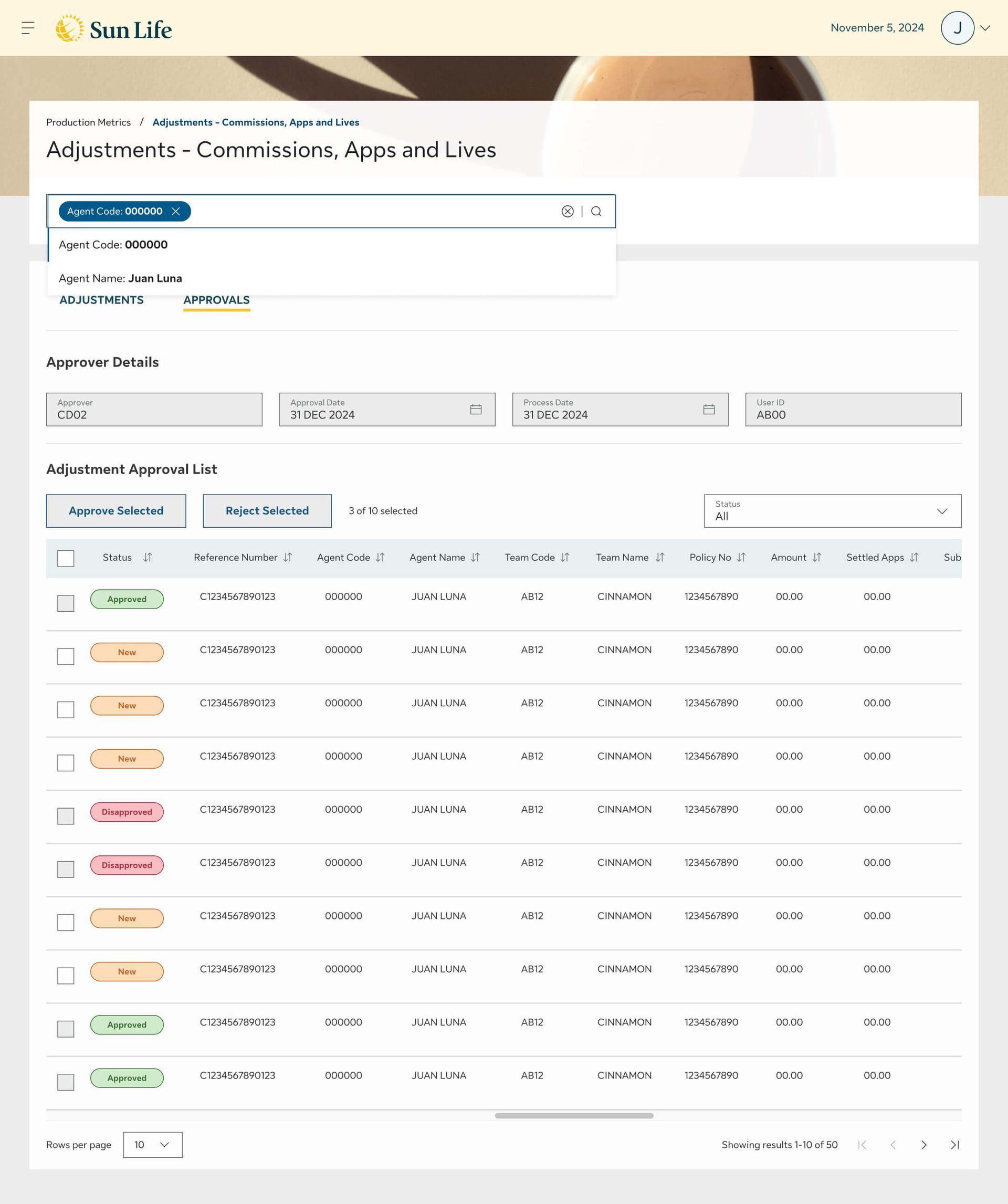
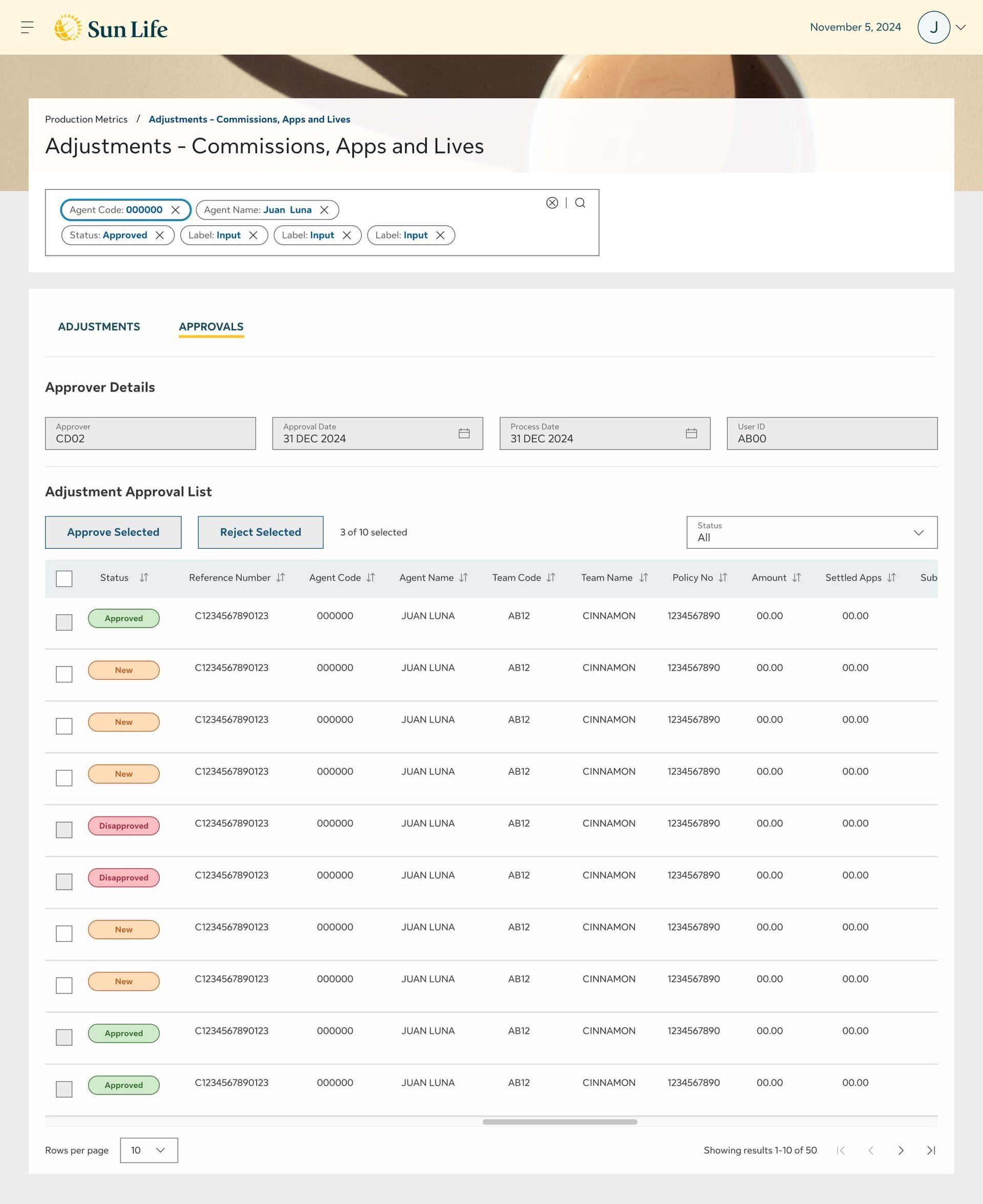
Production Metrics - Adjustments
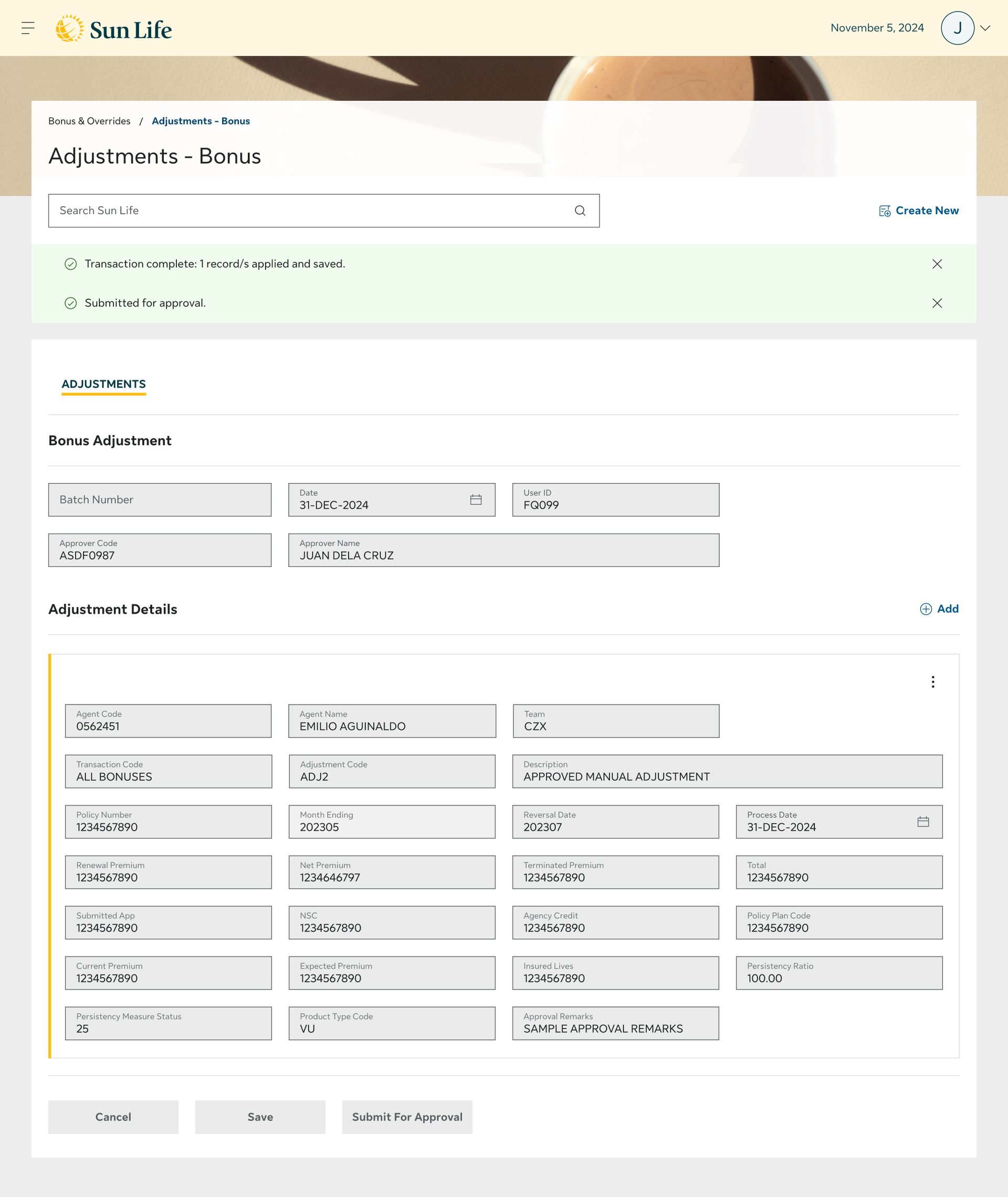
The adjustment commission process underwent a complete systems redesign to improve performance, reduce manual intervention, and increase reporting accuracy across production environments.
- Enabled parallel processing and auto-scaling, eliminating bottlenecks during high-volume runs.
- New Adjustment Dashboard features predictive error suggestions, faster lookup, and self-service reconciliation.
- Simplified interface led to higher adoption and efficiency among commission analysts.
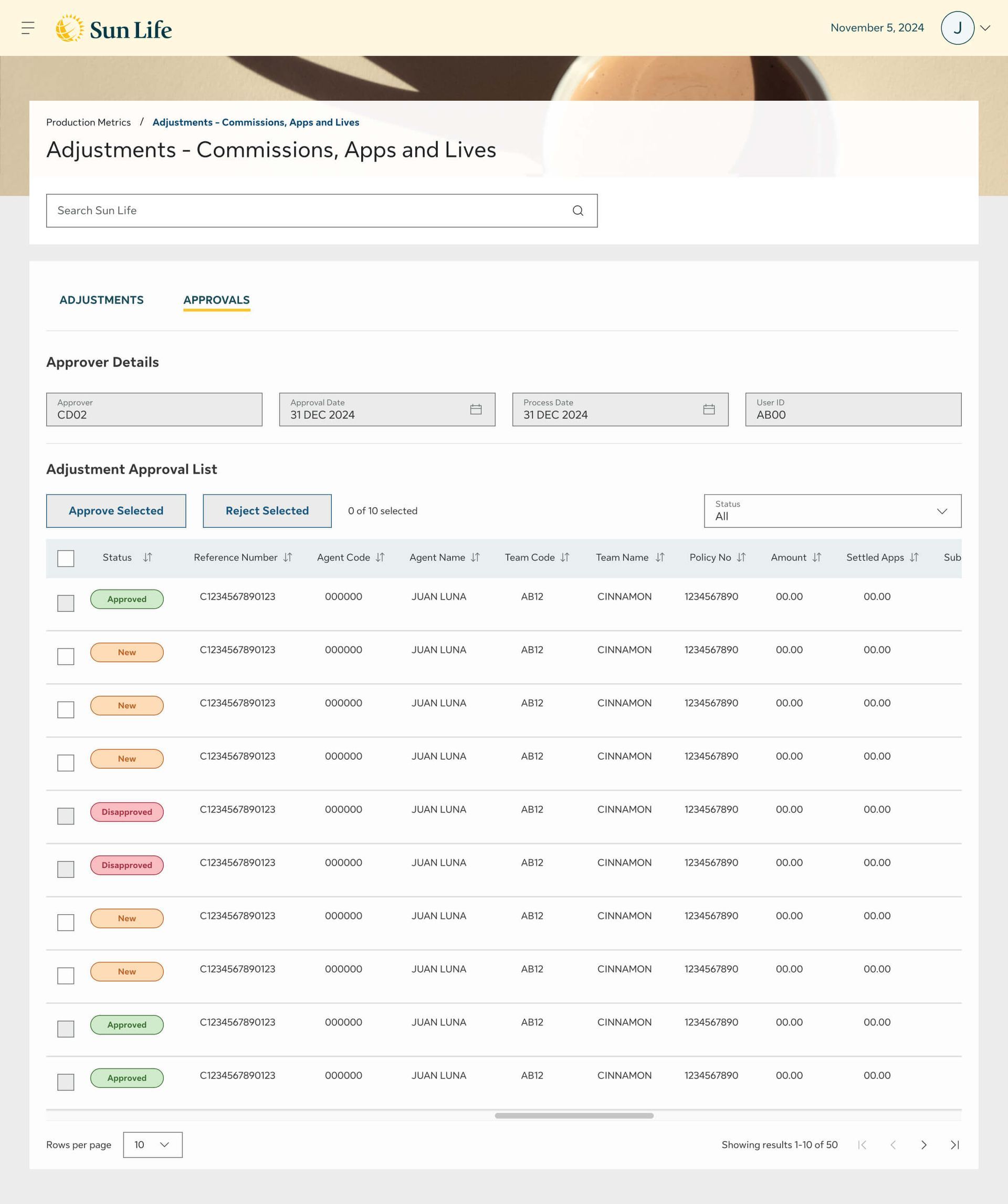
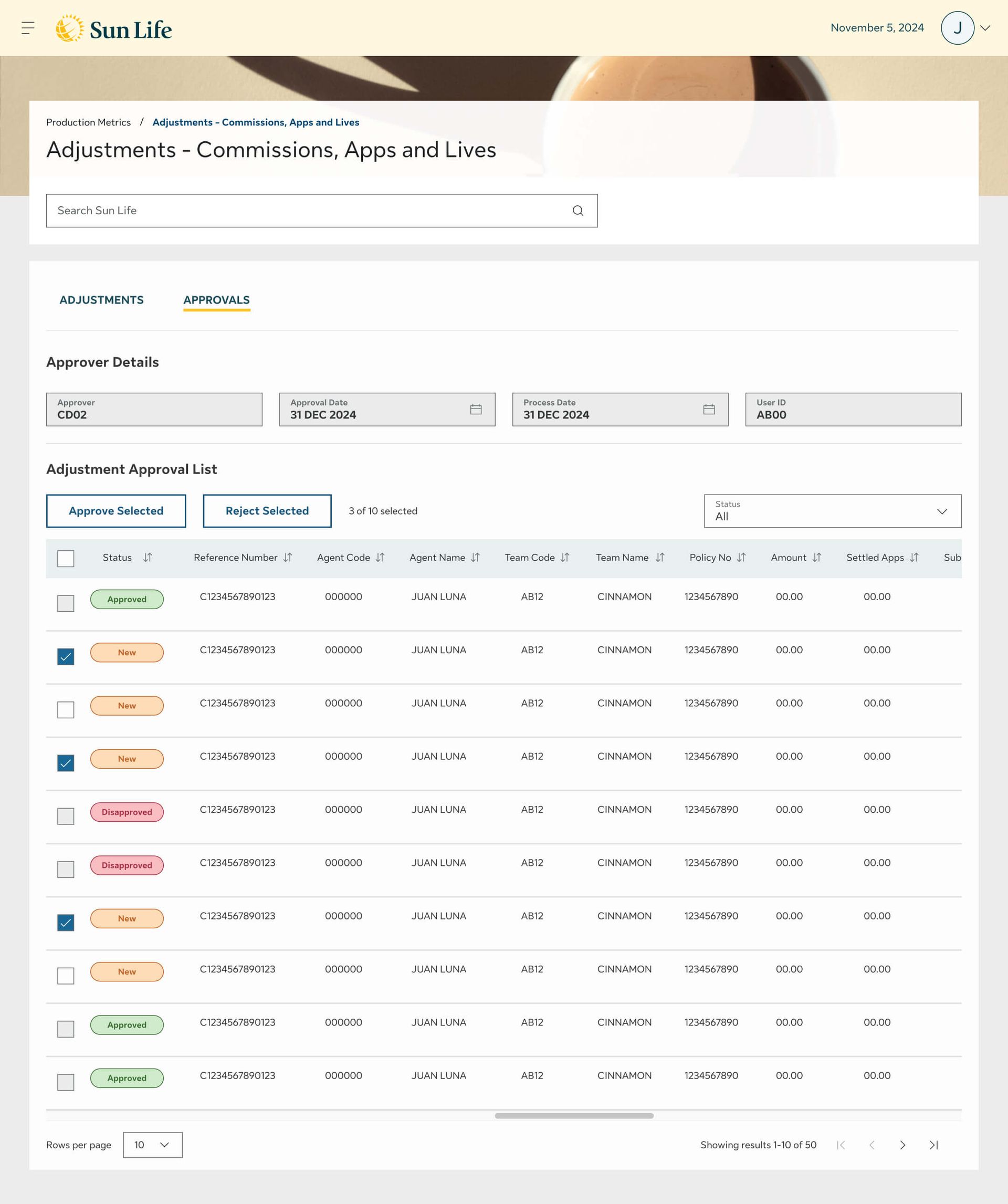
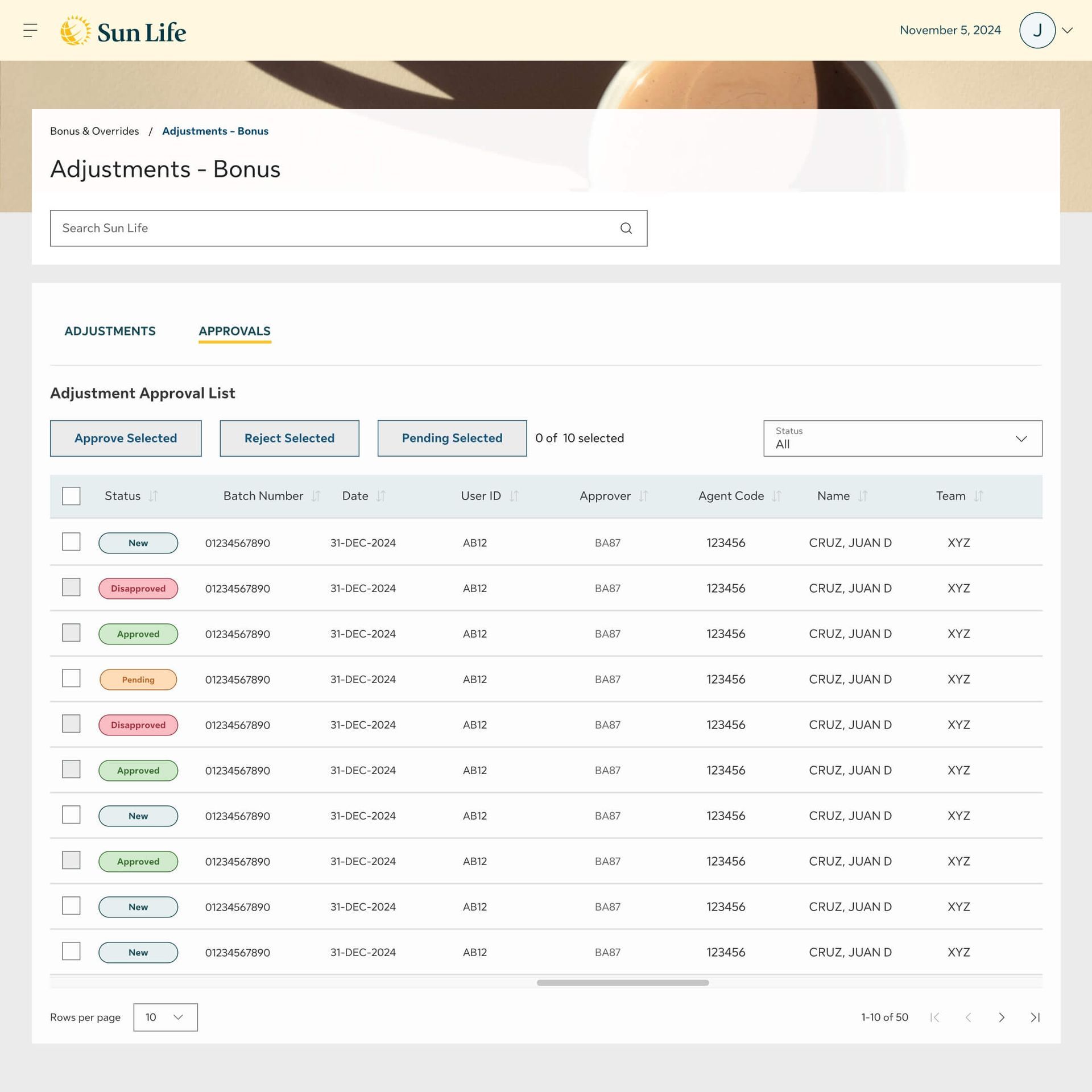
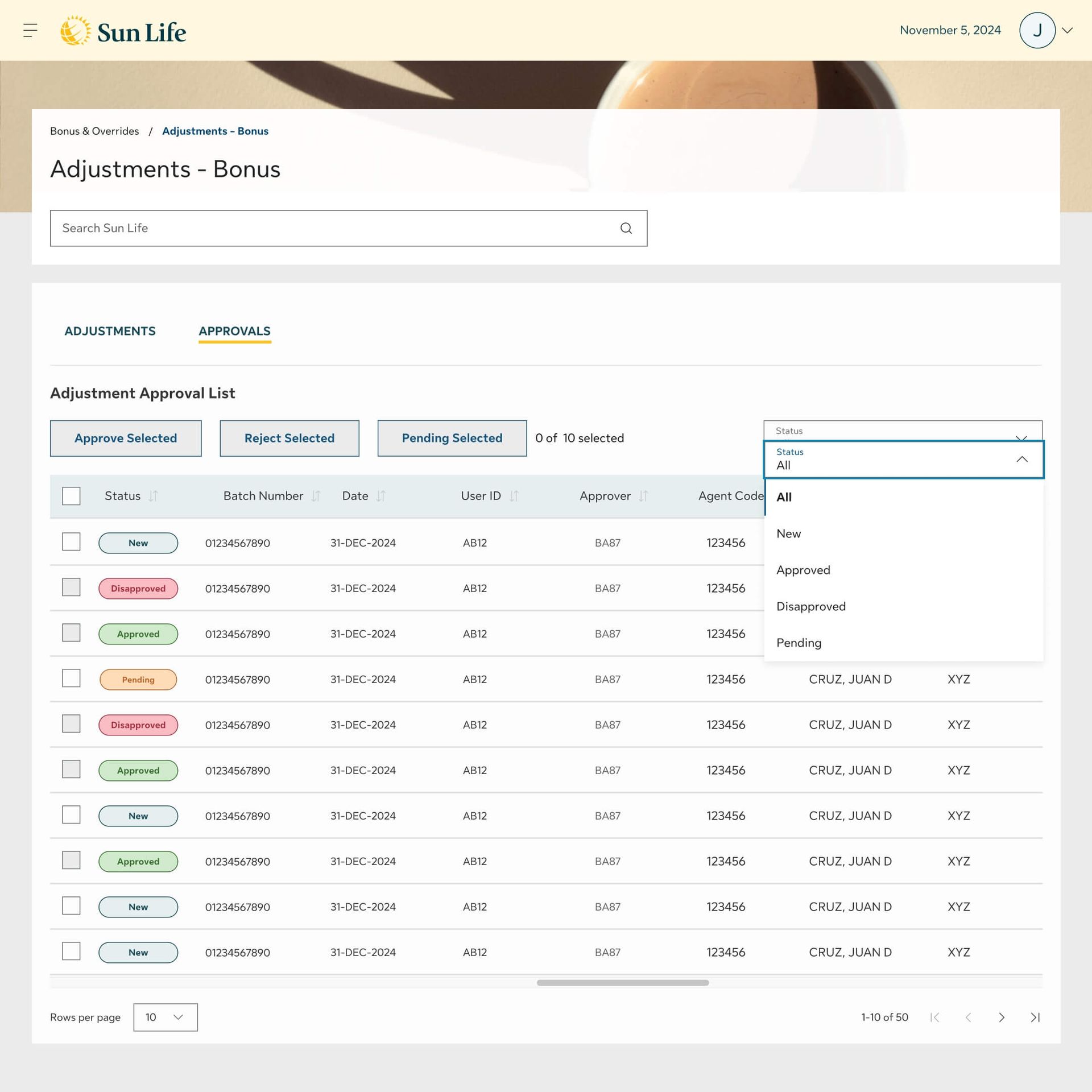
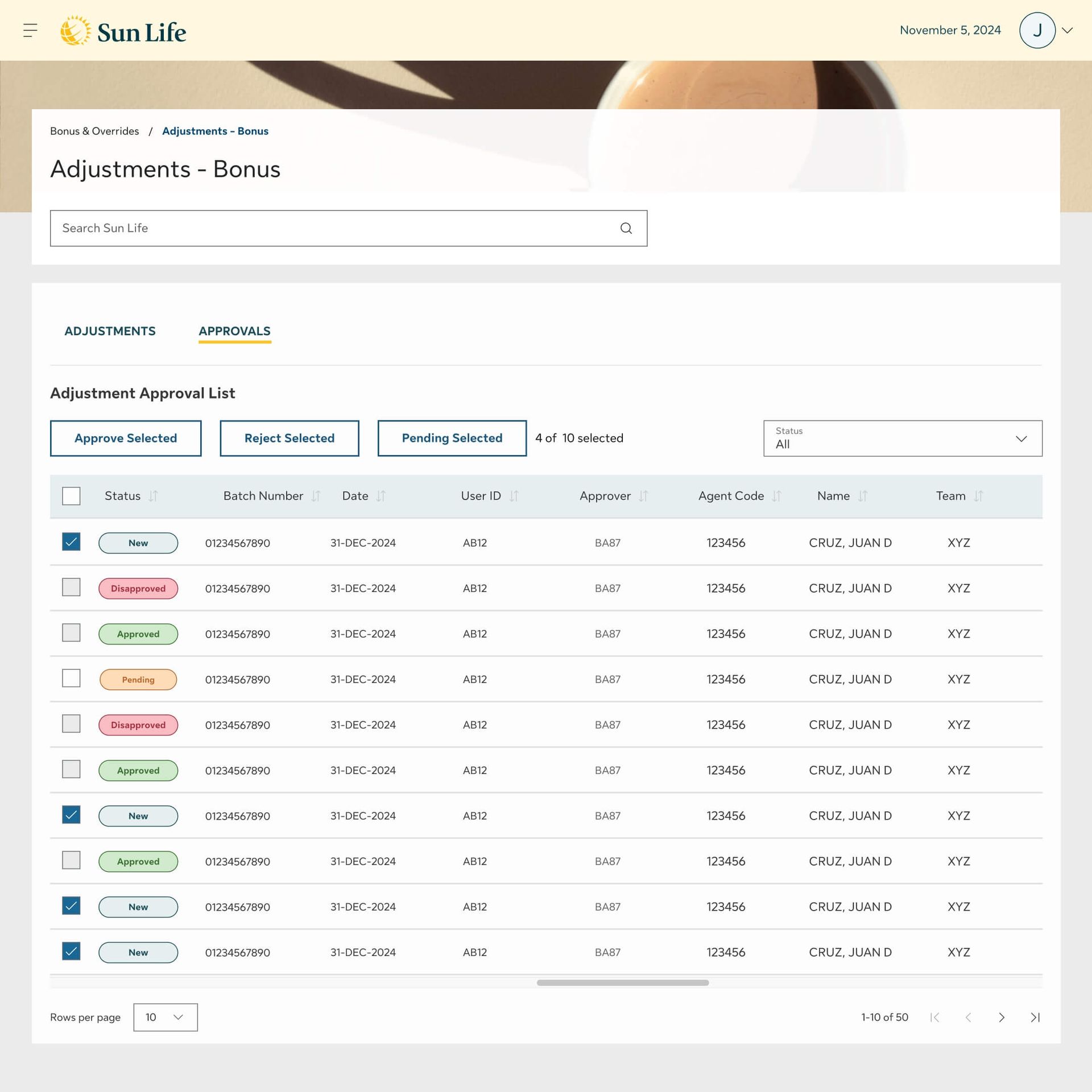
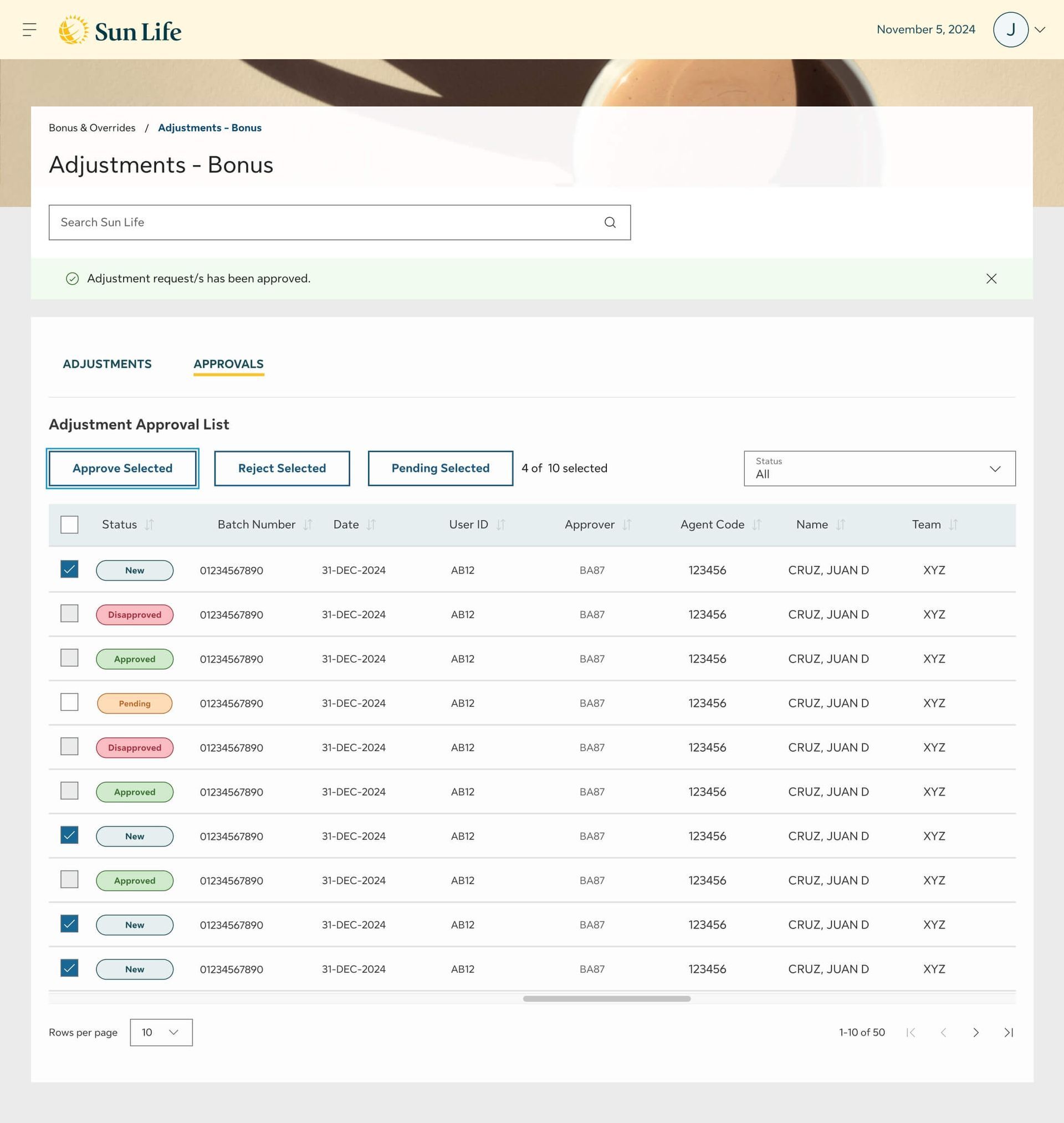
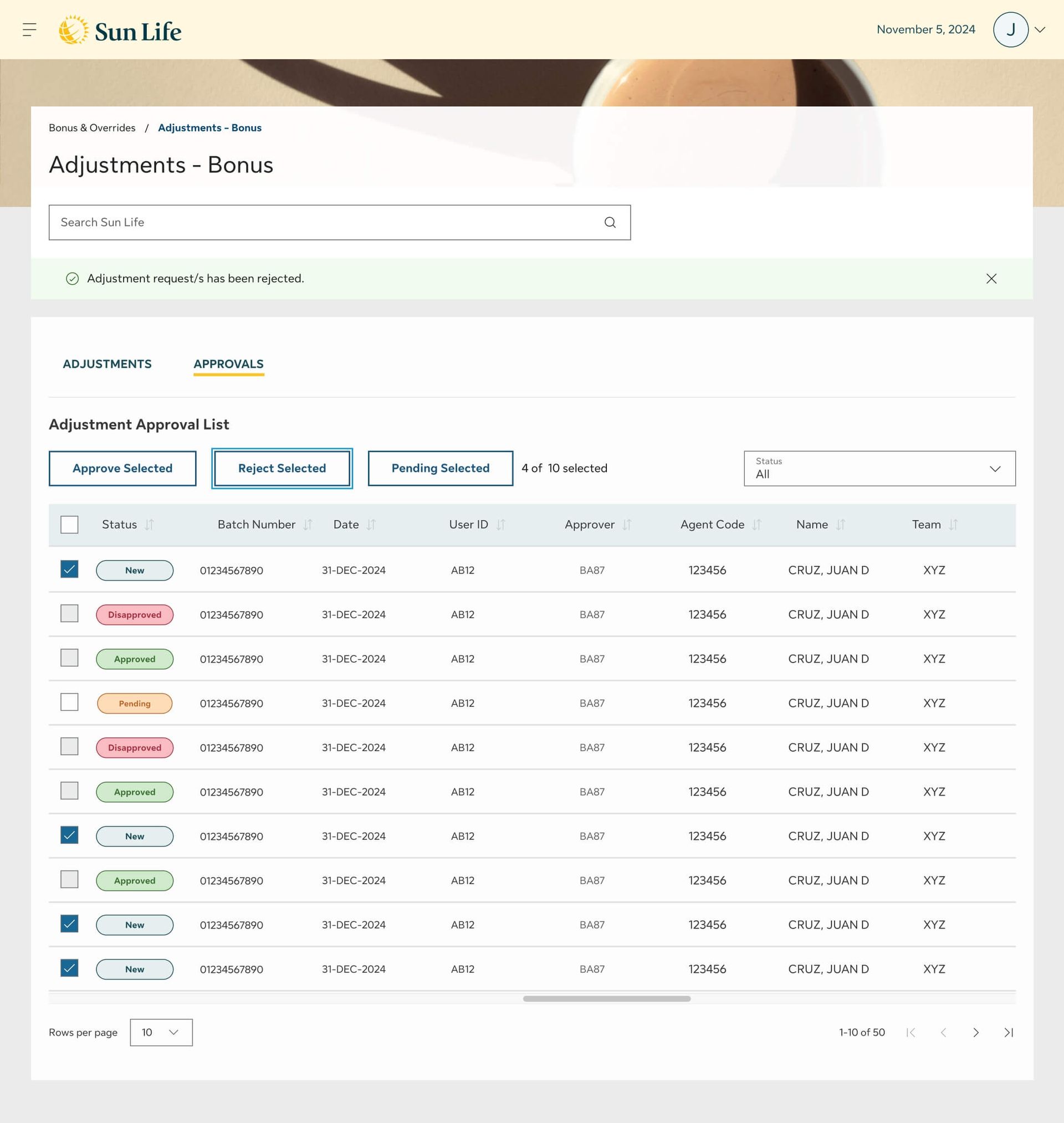
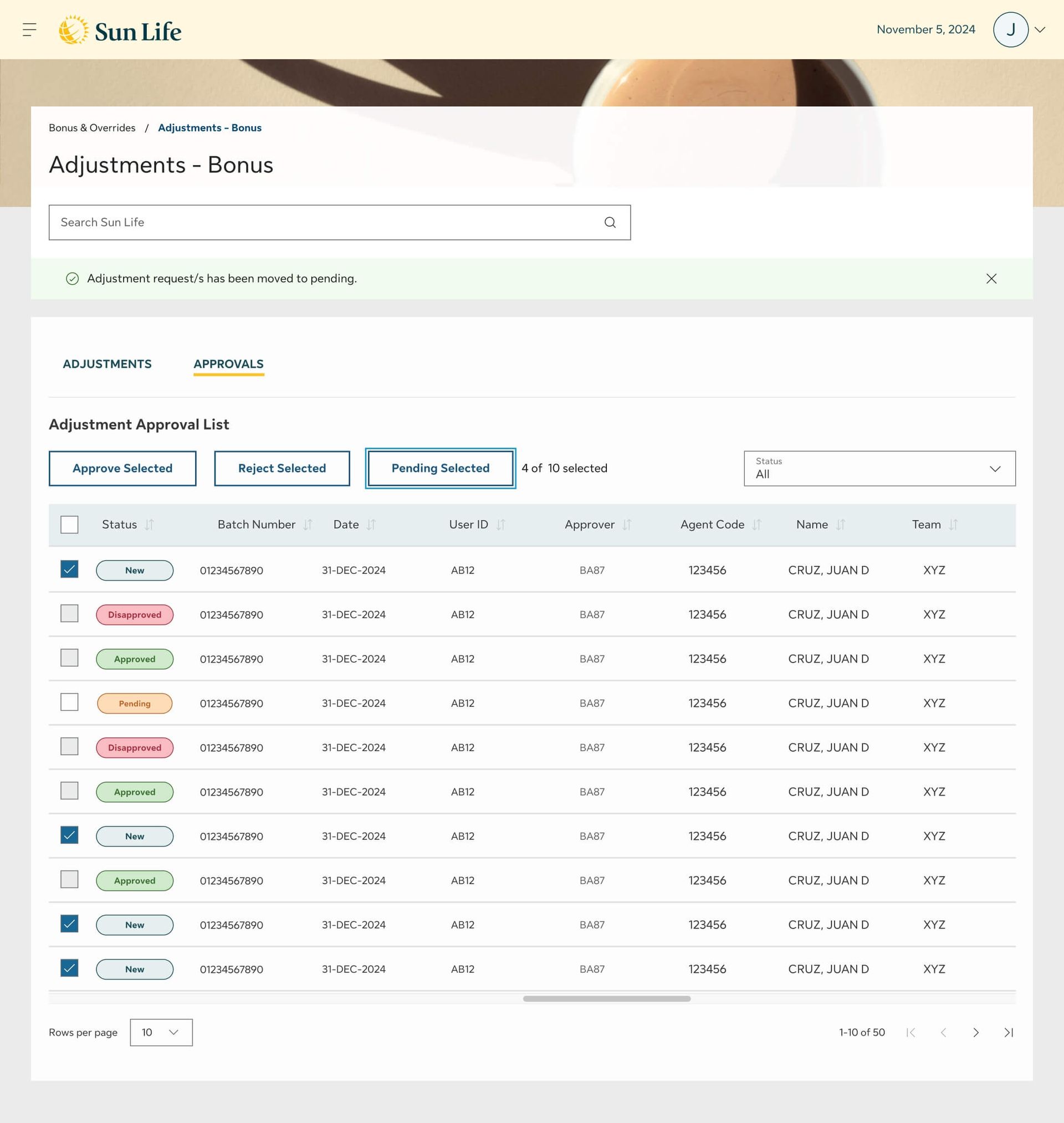
Production Metrics - Approvals
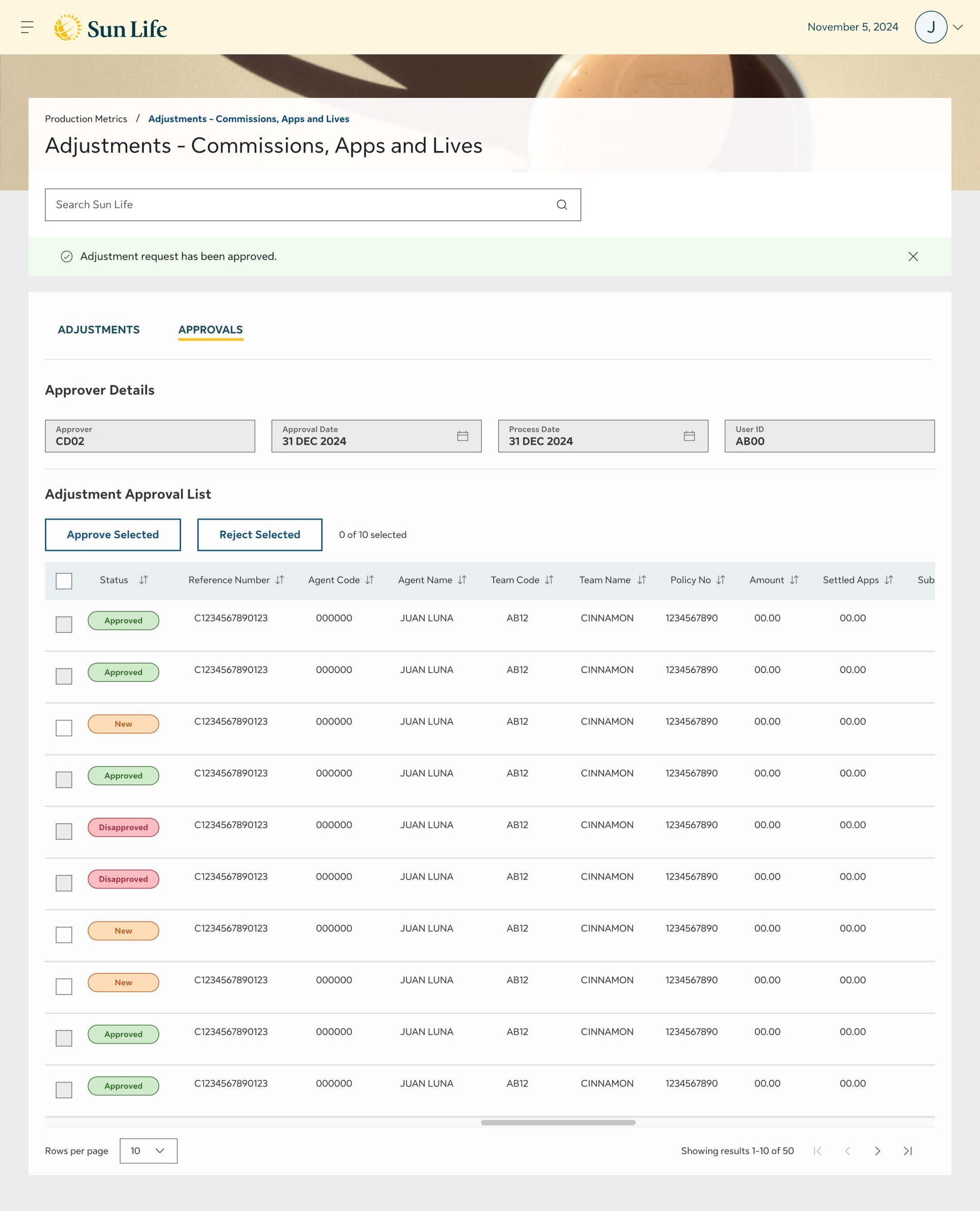
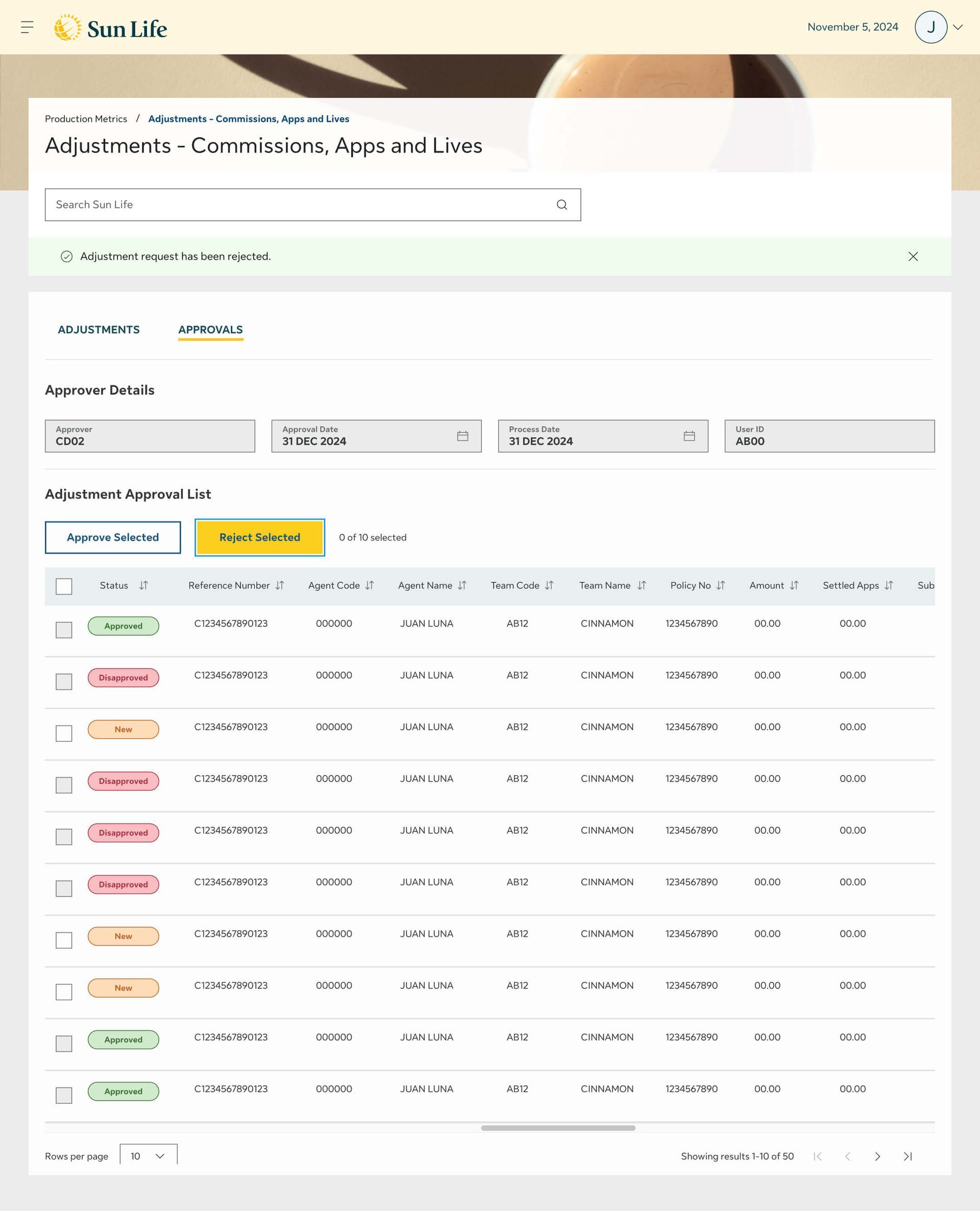
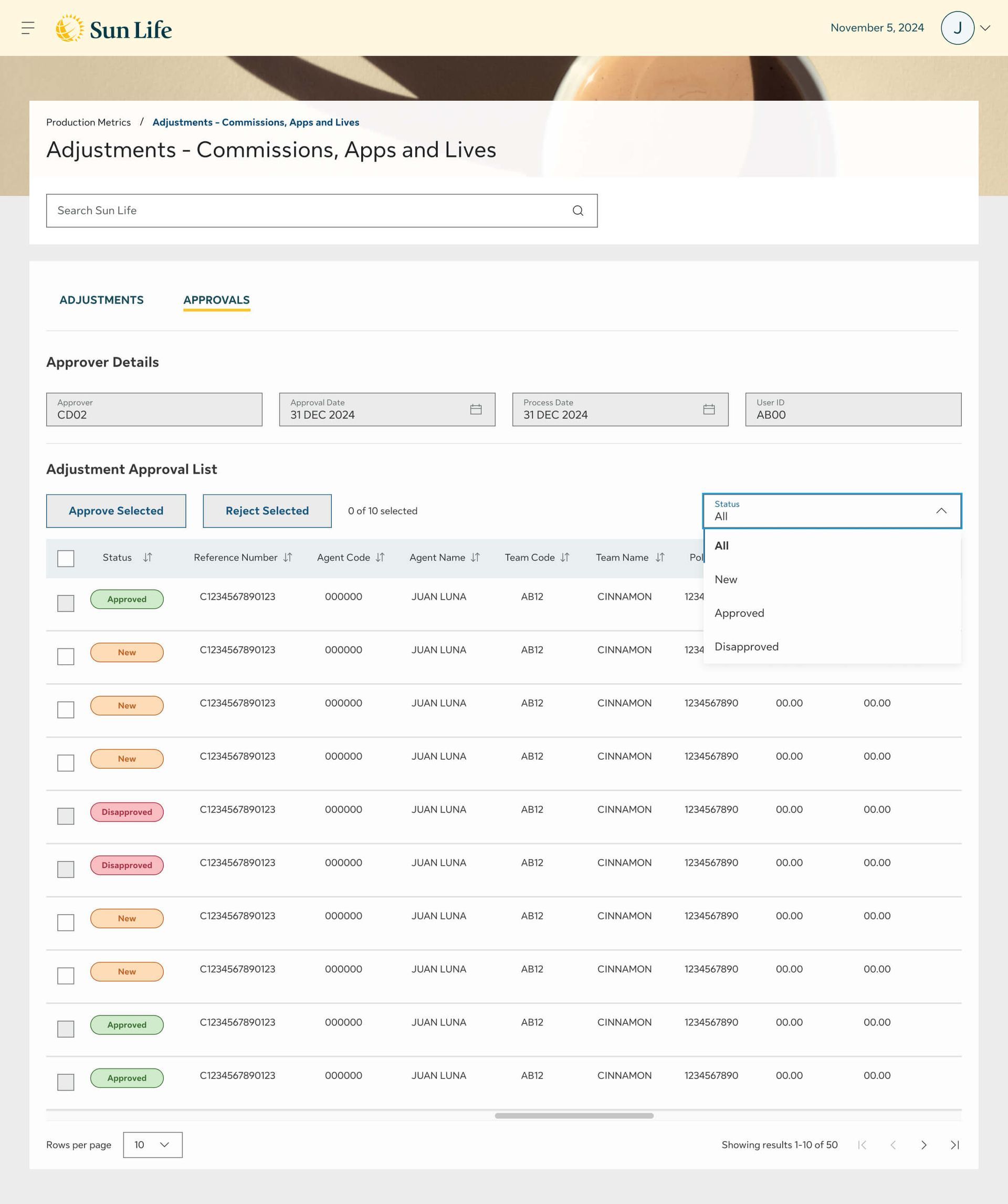
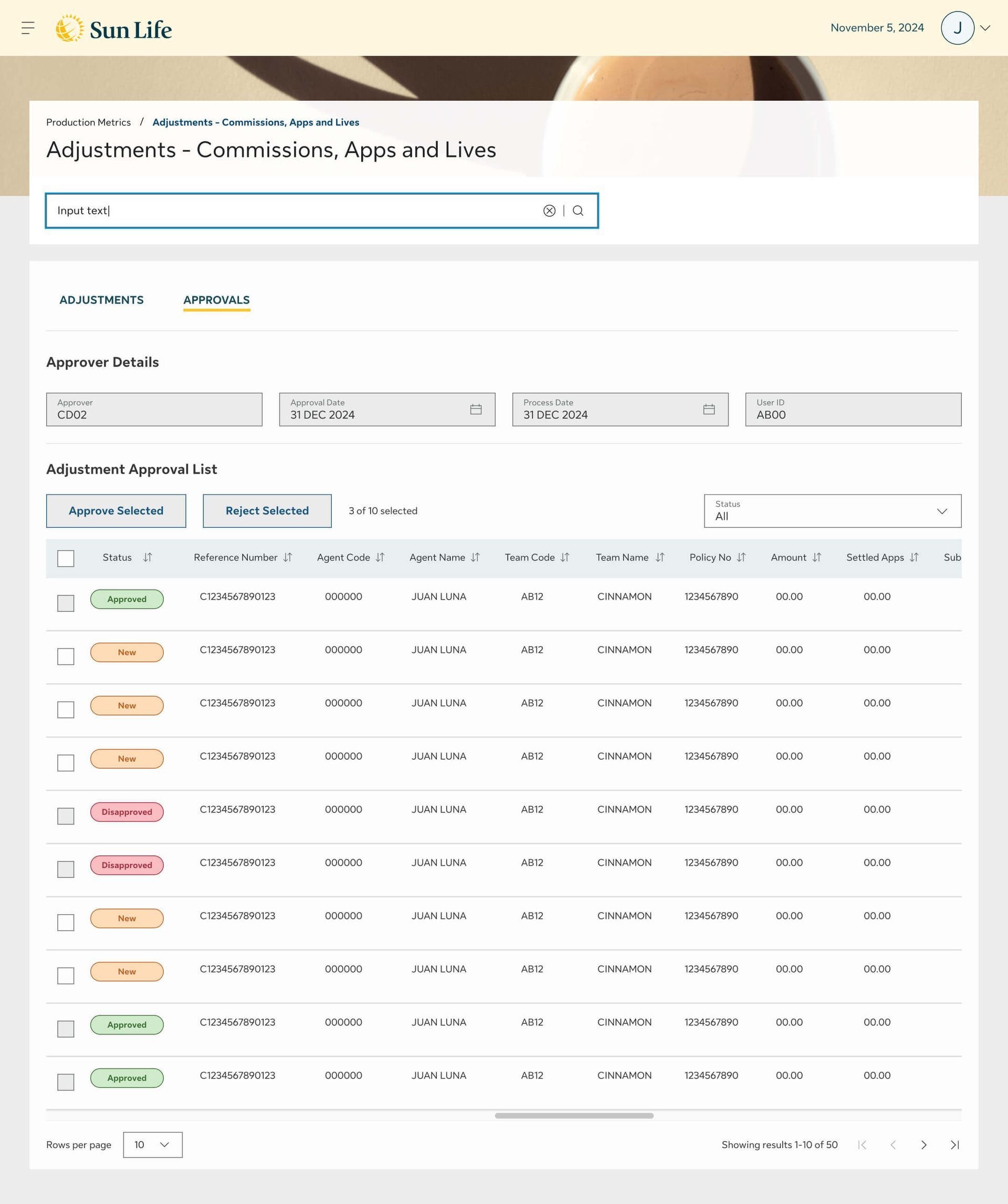
- Consolidated “single-view approval screen” reduces switching between modules.
- Streamlined UI and faster system response allow approvers to process more requests per day.
Improvement
- Approval time reduced significantly, enabling faster turnaround and higher throughput.
- Increased productivity and reduced backlog volume.
Bonus Overrides
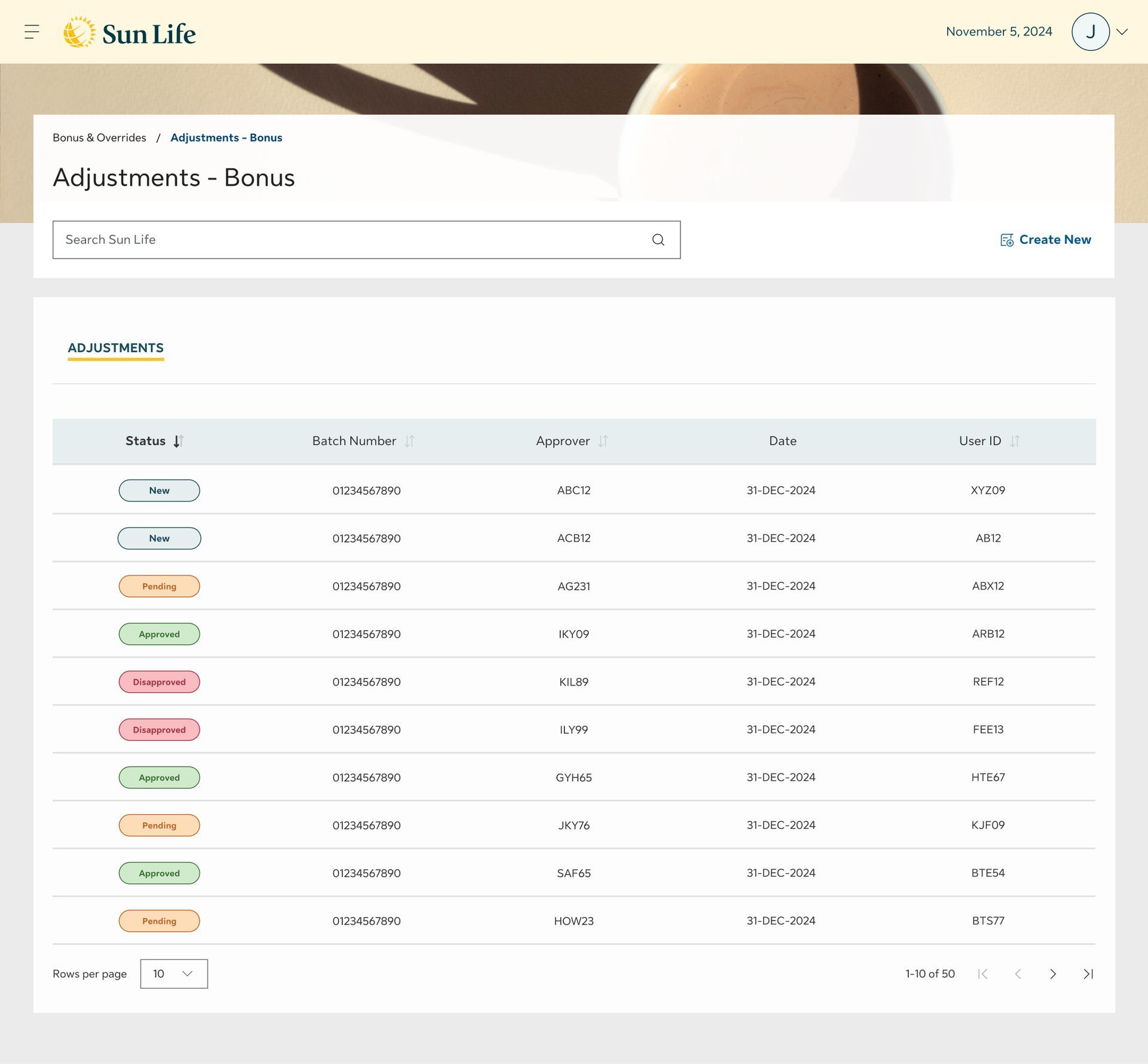
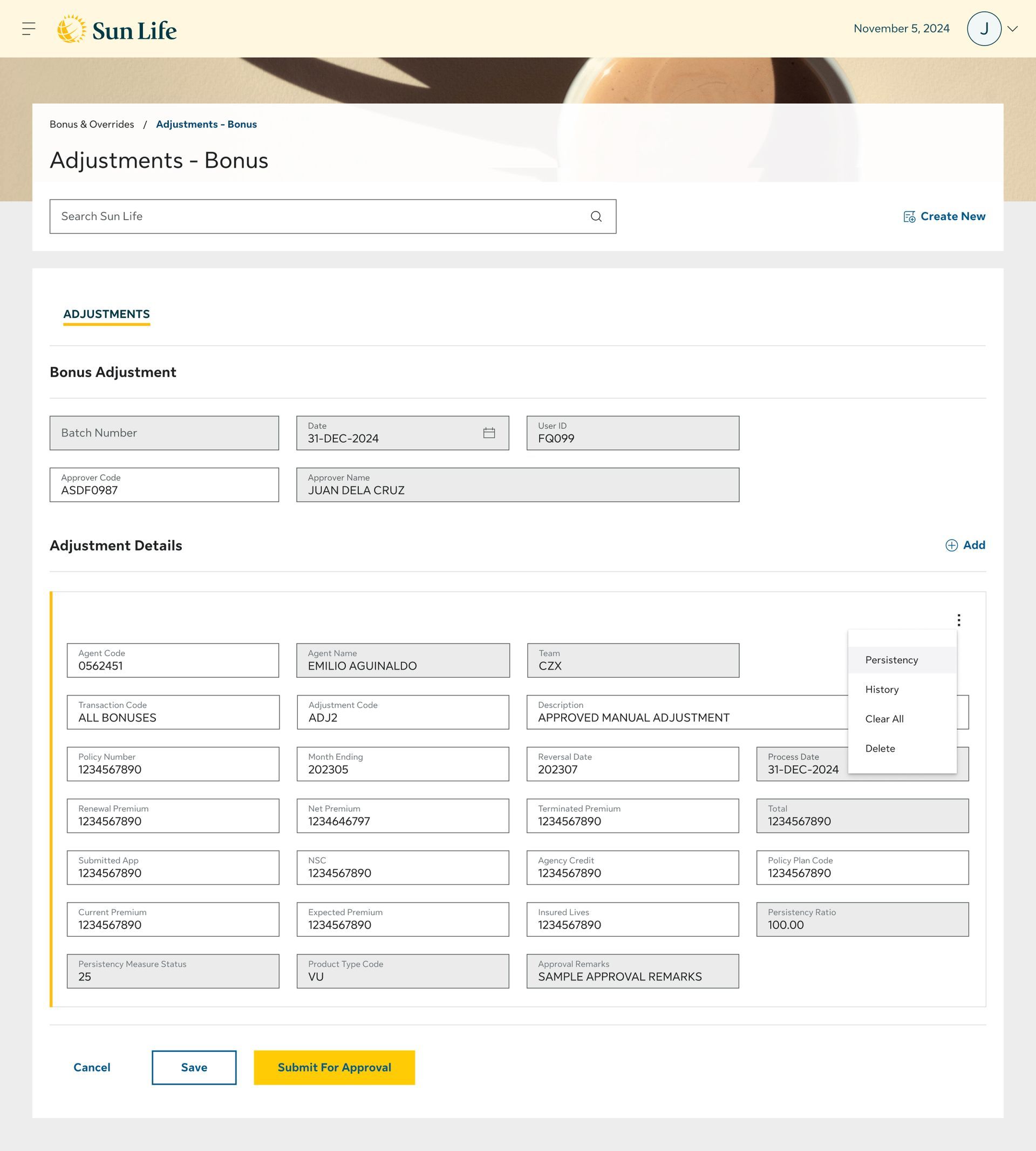
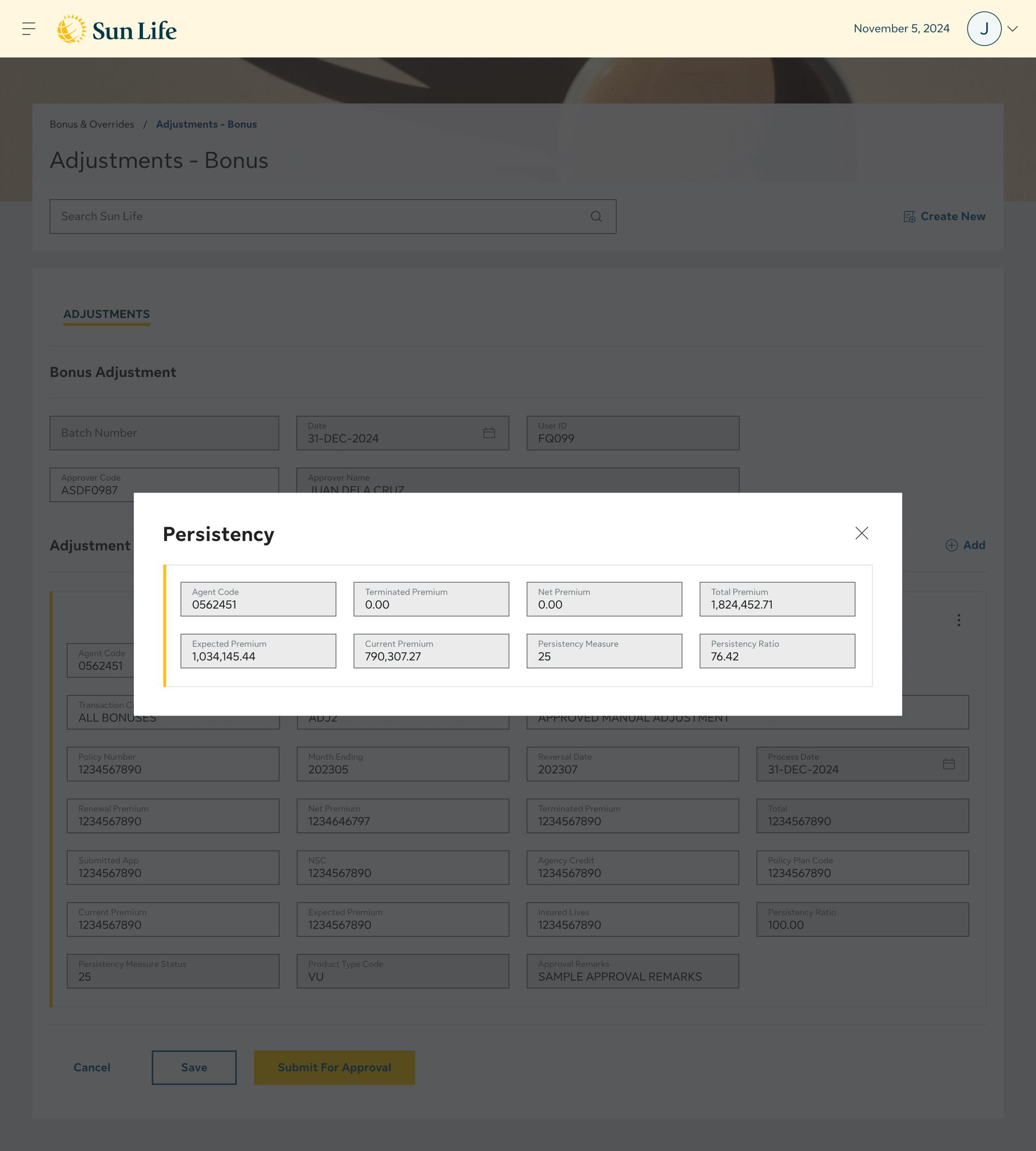
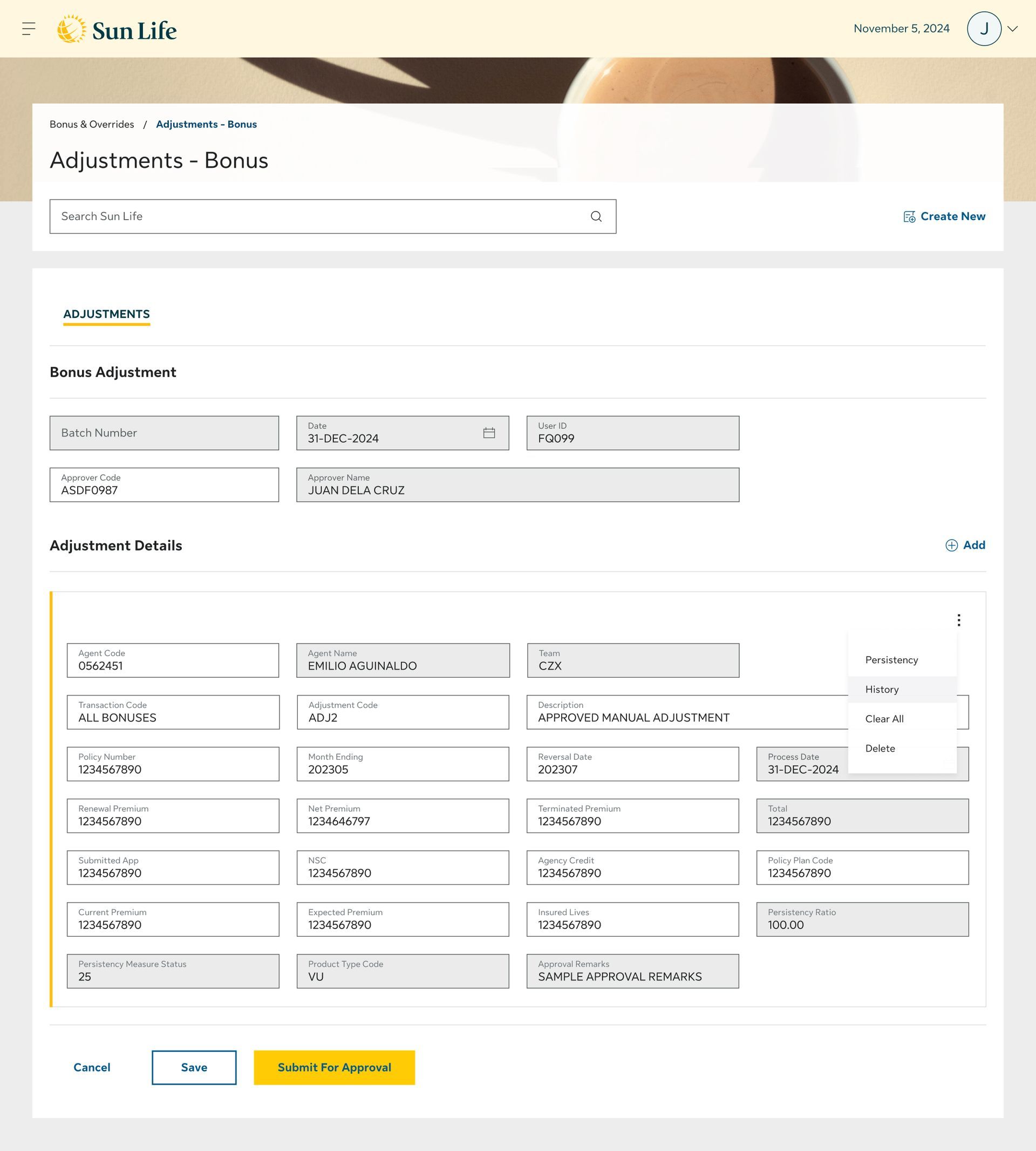
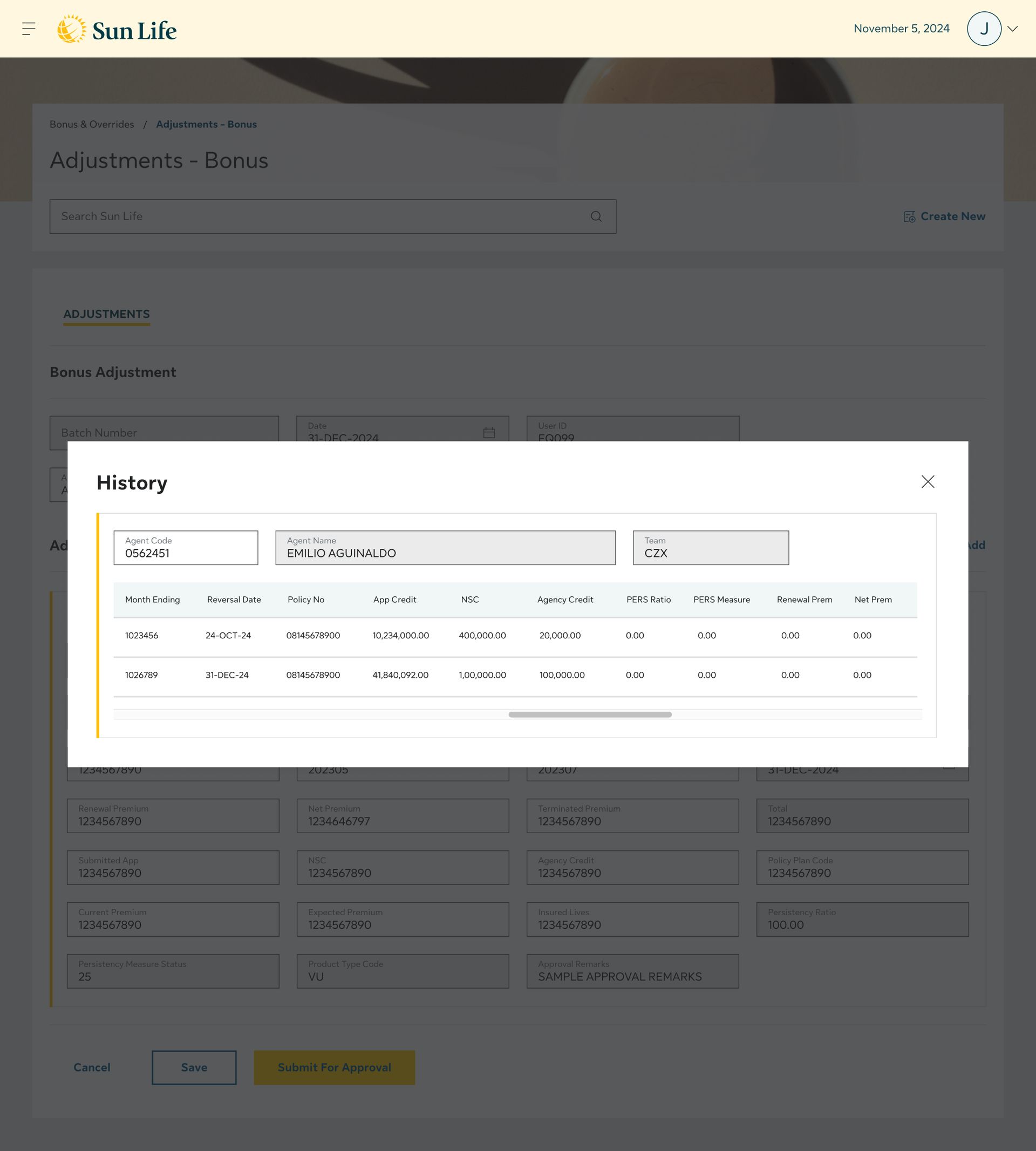
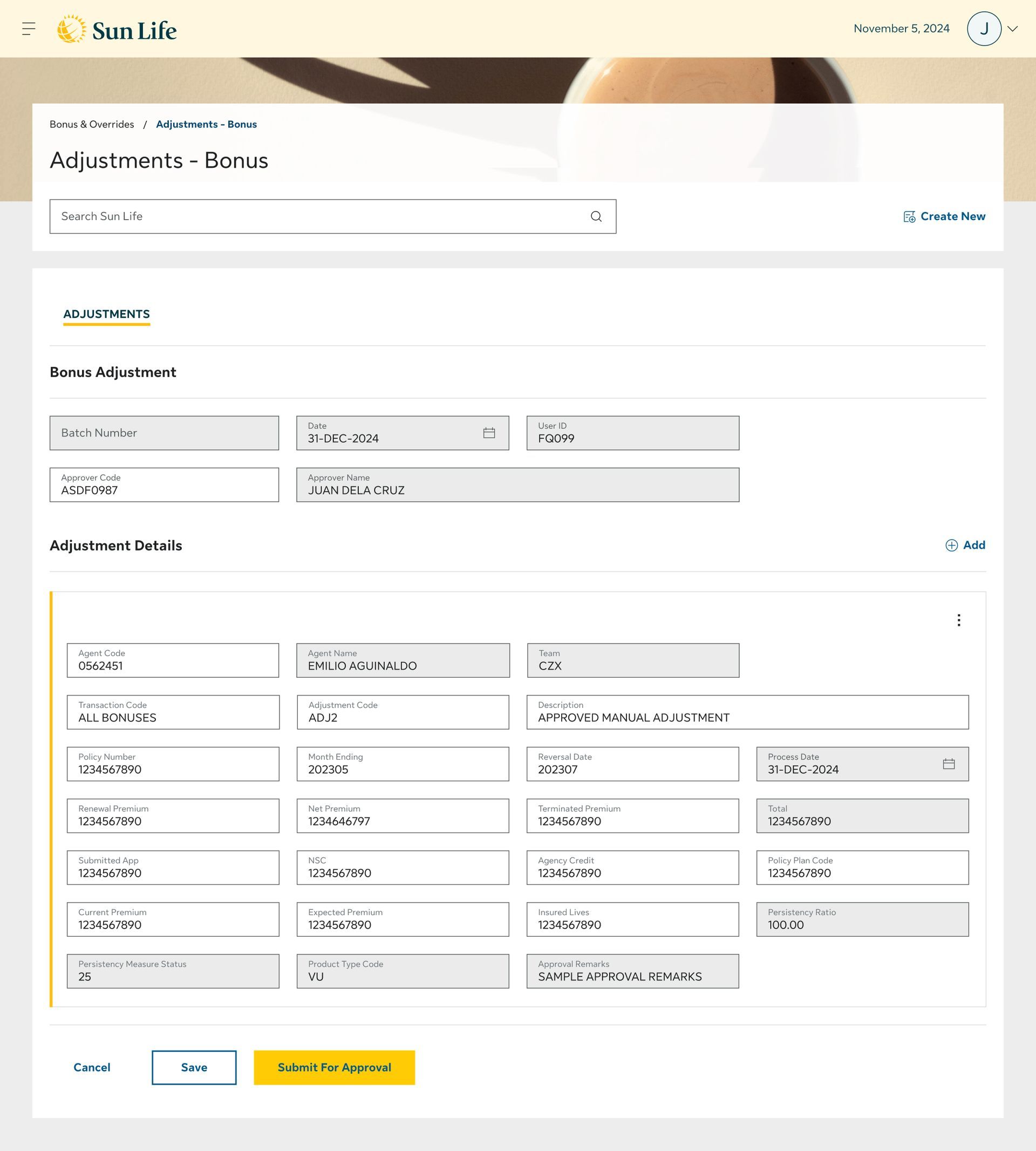
The redesign focuses on transparency, automation, and scalability, ensuring that bonus and override calculations align seamlessly with Sun Life’s evolving business strategies and digital operations
- The redesign ensures hierarchy data is accurate and automated versus manual spreadsheets.
- Enhanced transparency: dashboards for uplines/downlines to view pending overrides, and the status
- All text fields, data tables, and interface are implemented using the Sun Life Helios Global branding
Over-All Project Summary
The AgIS Tech Migration Project marks a significant transformation initiative for Sun Life of Canada (Philippines), Inc., elevating the Agent Information System into a modern, intuitive, and performance-driven digital workspace through a comprehensive cycle of research, discovery, an updated interface, data insights, and a more seamless user experience.
2+
Week's research and discovery
phase
1+
Week usability testing phase
319+
UI redesigned pages, iterated, and approved
278
Total design pages developed
60%
Design phase completion
2+
UX/UI Sr. Designers collaborated
Moving Forward
The journey doesn't end with the rebrand. We are committed to continuously enhancing the user experience, expanding self-service features, and keeping pace with evolving security needs. Future enhancements will focus on further simplifying the user journey, expanding integration capabilities, and providing more personalized tools for users to manage their MPF with ease. With these goals in mind, we aim to maintain leadership in the MPF sector and build long-lasting trust with our growing user base.